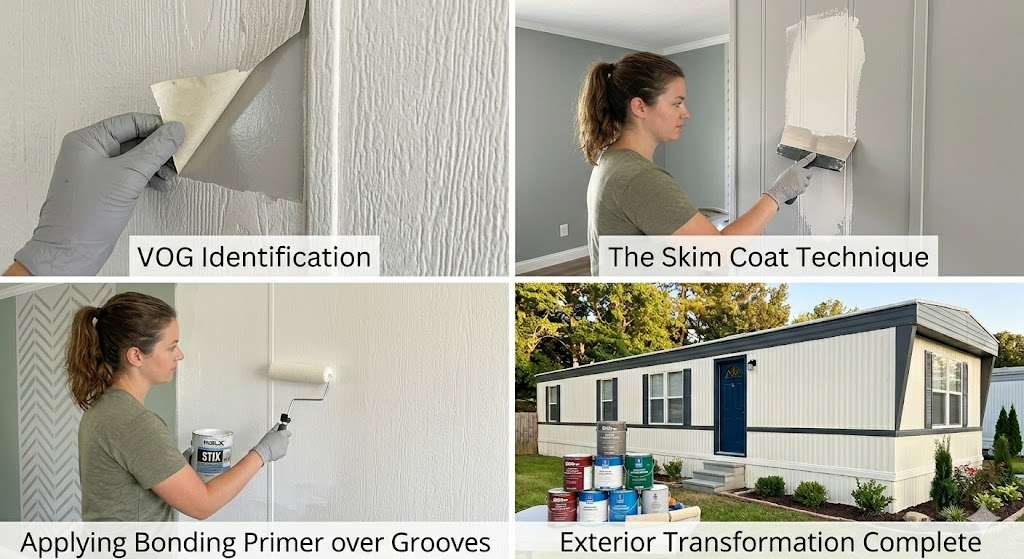
If you’ve been staring at the dingy walls of your mobile home wondering whether you can actually paint them — yes, you absolutely can. And doing it yourself is one of the highest-impact, lowest-cost mobile home remodel ideas on a budget you can make. But mobile home walls aren’t the same as drywall. Most are made of vinyl-covered gypsum panels (often called VOG — vinyl over gypsum) or thin wood paneling. Use the wrong paint and it will peel within months. Use the right paint — plus the right primer — and you’ll get a finish that lasts for years. This guide covers the best paint for mobile home walls (interior and exterior), how to prep and prime correctly, color inspiration, and a simple step-by-step process you can follow even if you’ve never painted a room before.
Can you paint mobile home walls?
Yes — with the right preparation. The main challenge is adhesion. VOG paneling has a smooth, slightly slick vinyl surface that standard latex paint won’t grip well without primer. The same goes for aluminum or vinyl exterior siding.
What are mobile home walls made of?
Most mobile homes built after the 1970s have interior walls made of VOG paneling — a thin layer of vinyl laminated over a gypsum board core. Older homes may have wood-grain paneling. Some manufactured homes built after 2000 have standard drywall. If you’re unsure, tap the wall: VOG sounds slightly hollow, drywall sounds solid. The exterior is typically aluminum siding, vinyl siding, or hardy board (fiber cement). Each requires a slightly different approach, which we’ll cover below. Not sure what your walls are? Look at a corner or door frame where the panel meets the trim — if you can see a thin, hard laminate edge with a slight sheen, it’s VOG paneling.
Best paint for mobile home interior walls
For VOG paneling and other smooth interior surfaces, you want a paint that bonds well and has enough flexibility to move with the wall without cracking. Here’s what works:
1. Latex paint (water-based) — best all-around pick
High-quality 100% acrylic latex paint is the gold standard for mobile home interiors. It’s flexible, low-VOC, dries fast, and cleans up with water. Look for a paint with a satin or eggshell finish — flat paint shows every scuff and is hard to clean, while semi-gloss can look too shiny on large wall surfaces.
- Behr Premium Plus (eggshell or satin) — excellent coverage, widely available at Home Depot
- Sherwin-Williams SuperPaint — great adhesion and durability, worth the extra cost
- Glidden Premium — budget-friendly option that still performs well on VOG
2. Cabinet and trim paint — for paneling with deep grooves
Some mobile home paneling has v-groove lines running vertically. If those grooves are deep, a thicker cabinet-style paint fills them slightly and gives a smoother final look. Benjamin Moore Advance or Sherwin-Williams Emerald Urethane both work well here.
3. Chalk paint — for a matte, farmhouse look
Chalk-style paint has become popular for mobile home makeovers because it adheres to almost anything with minimal prep, including slick VOG surfaces. The trade-off is durability — it scratches more easily than latex and needs to be sealed with wax or a clear topcoat. If you want to try chalk paint on your walls, do a test patch first. Apply one coat, let it cure for 48 hours, then scratch it with your fingernail. If it lifts easily, add a coat of bonding primer before painting the full room.
Best primer for mobile home walls
Primer is not optional on VOG paneling. It’s the single most important step. Skip it and your paint will peel — guaranteed. Check out our comprehensive guide on how to paint mobile home walls without peeling to prevent this. Use it and your paint job can last 10+ years.
Bonding primer — your best friend on VOG

Editor’s Top Primer Pick: INSL-X Stix Waterborne Bonding Primer
If you are dealing with particularly slick VOG paneling or glossy surfaces, this acrylic primer offers unparalleled adhesion. It cures to a tough finish that ensures your topcoat won’t peel.
Check Price on AmazonA bonding primer is specially formulated to grip slick, non-porous surfaces. It creates a mechanical bond that gives your topcoat something to hold onto.
- Zinsser Bulls Eye 1-2-3 — the most popular choice for VOG paneling, water-based, low odor
- KILZ Adhesion Bonding Primer — excellent for smooth or glossy surfaces, dries in 1 hour
- Zinsser BIN Shellac-Based Primer — if there are stains or smoke odors to block, this is the heavy-duty option
Apply one coat of bonding primer, let it dry completely (at least 2 hours, ideally overnight), then lightly sand with 220-grit sandpaper and wipe down with a damp cloth before painting. This extra step makes a massive difference. If your walls have the original v-groove pattern and you want to minimize it, apply a skim coat of drywall joint compound along the grooves before priming. Let it dry, sand smooth, prime, then paint.
Best paint for mobile home exterior
Exterior painting is a bigger job but also a bigger reward — a freshly painted exterior can add thousands of dollars to a mobile home’s value and dramatically improve curb appeal.
For aluminum siding

Best Exterior Base: Rust-Oleum Painter’s Touch Primer
Before painting aluminum siding, locking out chalky residue and rust is crucial. This primer goes on smooth, blocks oxidation, and creates the perfect canvas for your exterior acrylic latex.
Check Price on AmazonAluminum siding is durable but oxidizes over time, leaving a chalky residue that must be cleaned off before painting. Use a 100% acrylic exterior paint with a built-in primer, or prime with a metal-specific primer first.
- Rust-Oleum Restore — thick, peel-resistant formula designed specifically for aluminum
- Behr Premium Plus Exterior — great adhesion, available in a wide range of colors
- Sherwin-Williams Emerald Exterior — premium option with excellent fade resistance
For vinyl siding
Vinyl expands and contracts significantly with temperature changes, so you need a flexible paint that won’t crack. Never paint vinyl a darker color than its original shade — darker colors absorb more heat and can cause the siding to warp. Use 100% acrylic exterior latex with an LRV (light reflectance value) close to or lighter than the original color.
- Valspar Duramax Exterior — excellent adhesion to vinyl with a flexible finish
- Duration Home by Sherwin-Williams — self-priming, highly flexible, great for vinyl
Exterior primer
For aluminum siding, use a rust-inhibiting primer. For vinyl, a dedicated vinyl primer (or a self-priming paint) is ideal. For wood or hardy board, use an exterior oil-based or 100% acrylic primer.
- KILZ Exterior — reliable, widely available, good adhesion on multiple surfaces
- Zinsser Perma-White — also blocks mold and mildew, great for humid climates
Mobile home paint color ideas
Choosing colors for a mobile home follows the same principles as any home — but the smaller scale means bold choices can feel overwhelming. Here’s what tends to work well:
Interior color ideas

Upgrade Your Space: Geometric Herringbone Wall Stencil
Want the look of expensive wallpaper without the hassle or price tag? This reusable geometric stencil makes creating a stunning, modern accent wall incredibly easy, even for beginners.
Check Price on Amazon- Light gray or warm white walls — creates the illusion of more space and works with any furniture style
- Sage green — incredibly popular right now, calming, and pairs well with natural wood tones
- Greige (gray-beige) — a versatile neutral that photographs beautifully and never feels trendy or dated
- Soft navy accent wall — paint one wall a deep navy while keeping the others white for a high-contrast, modern look
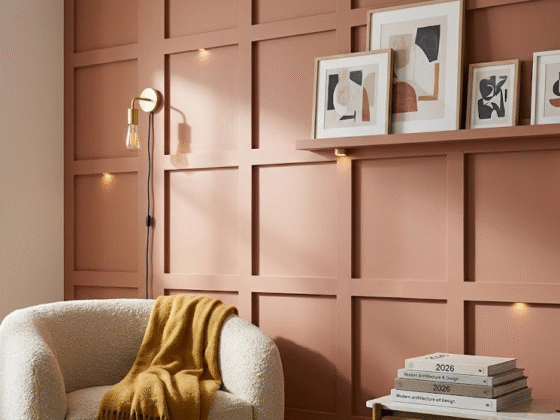
If you want to add character without a full repaint, consider painting just the ceiling a contrasting color, or using a stencil to create a pattern on a focal wall. A simple geometric stencil with a paint roller takes an afternoon and looks like it cost ten times what it did.
Exterior color ideas
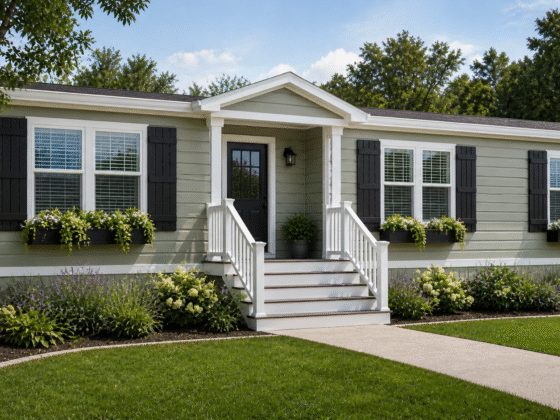
- White or cream with dark trim — classic, timeless, adds perceived value
- Gray with white trim and a black or red door — modern farmhouse aesthetic that’s very popular right now
- Warm tan or beige — blends naturally with landscaping and ages gracefully
- Pale yellow or soft blue — gives a cottage or beach house feel, works well in warmer climates
When choosing exterior colors, look at your neighbors’ homes and the surrounding landscape. A color that looks great in isolation can clash with its environment. Ordering a few peel-and-stick paint samples from your local hardware store and taping them to the exterior wall is the best $5 you’ll spend before committing.
How to paint mobile home walls: step by step
This process applies to interior VOG paneling. For exterior, the steps are the same but add pressure washing and waiting 24–48 hours for the surface to dry completely before applying primer.
What you’ll need

Must-Have Tool: Rhibak Professional Roller Kit with Extension
Save your back and speed up the job. This kit includes the exact 3/8″ nap covers needed for smooth VOG walls, plus an extension pole so you can roll from floor to ceiling without constantly climbing a ladder.
Check Price on Amazon- Bonding primer (Zinsser Bulls Eye 1-2-3 or KILZ Adhesion)
- 100% acrylic latex paint in satin or eggshell finish
- 9-inch paint roller with 3/8″ nap cover (for smooth-medium surfaces)
- 2.5-inch angled brush for corners and edges
- Painter’s tape
- Drop cloth or old sheets
- 220-grit sandpaper
- Trisodium phosphate (TSP) or a degreasing cleaner
- Bucket, roller tray, stir sticks
Step-by-step process
- Clean the walls thoroughly. Mix TSP with warm water and wipe down every surface. This removes grease, grime, and the thin film of residue that builds up on VOG over time. Let dry completely.
- Sand lightly. A quick pass with 220-grit sandpaper dulls the sheen on the vinyl surface and gives the primer something to bite into. Wipe off the dust with a damp cloth.
- Tape off trim, outlets, and edges. Take your time here — clean tape lines make the whole job look professional.
- Apply bonding primer. Use a brush to cut in corners and edges first, then roll the walls. One coat is usually enough. Let dry according to the manufacturer’s instructions (typically 1–2 hours minimum, but overnight is safer).
- Lightly sand the primed surface with 220-grit and wipe clean. This step removes any primer bumps and improves paint adhesion even more.
- Apply your first coat of paint. Cut in corners and edges with a brush, then roll the walls. Work in sections of about 4 feet wide, keeping a wet edge to avoid lap marks. Let dry completely (at least 4 hours) and apply a second coat. Two coats almost always gives better, more even color than one thick coat.
- Remove tape while the paint is still slightly tacky (not fully dry). Pull it back at a 45-degree angle slowly to get a clean line.
The biggest beginner mistake is rushing the drying time between coats. If the first coat isn’t fully dry when you apply the second, you’ll get streaks and the finish will feel tacky for days. When in doubt, wait longer.
Frequently asked questions
What is the best paint for mobile home walls?
For interior walls, a 100% acrylic latex paint in satin or eggshell finish applied over a bonding primer is the best combination. Behr Premium Plus, Sherwin-Williams SuperPaint, and Glidden Premium are all solid choices at different price points.
Can you paint trailer walls?
Yes — the terms “mobile home,” “manufactured home,” and “trailer” generally refer to the same types of construction. The interior wall panels are usually the same VOG material, and the same primer-and-latex approach works for all of them.
Do you have to prime mobile home walls before painting?
On VOG paneling, yes — priming is not optional. The vinyl surface is too smooth for regular paint to bond well. A bonding primer is what makes the paint stick. On standard drywall (found in some newer manufactured homes), you can sometimes skip a separate primer coat if you use a paint-and-primer-in-one product, though a dedicated primer still gives better results.
What kind of paint do you use on mobile home paneling?
After priming with a bonding primer, use a 100% acrylic latex paint. Avoid oil-based paints on interior walls — they yellow over time, take much longer to dry, and require mineral spirits for cleanup. Acrylic latex is more flexible, more durable on vinyl surfaces, and much easier to work with.
Can you paint mobile home siding?
Yes. Aluminum siding can be painted with an exterior acrylic latex paint after cleaning, sanding, and priming. Vinyl siding can also be painted, but use a paint specifically rated for vinyl and choose a color at or lighter than the original shade to avoid heat warping.
How long does it take to paint the interior of a mobile home?
A single-wide mobile home with average-size rooms typically takes one weekend for a DIYer: Friday evening for cleaning and prep, Saturday for priming, Sunday for two coats of paint. A double-wide takes closer to two weekends if you’re doing it alone.
Final thoughts
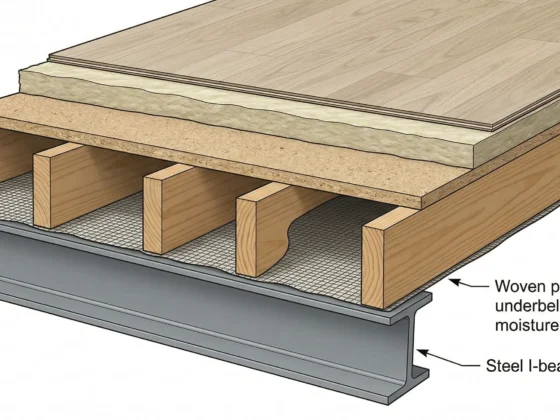
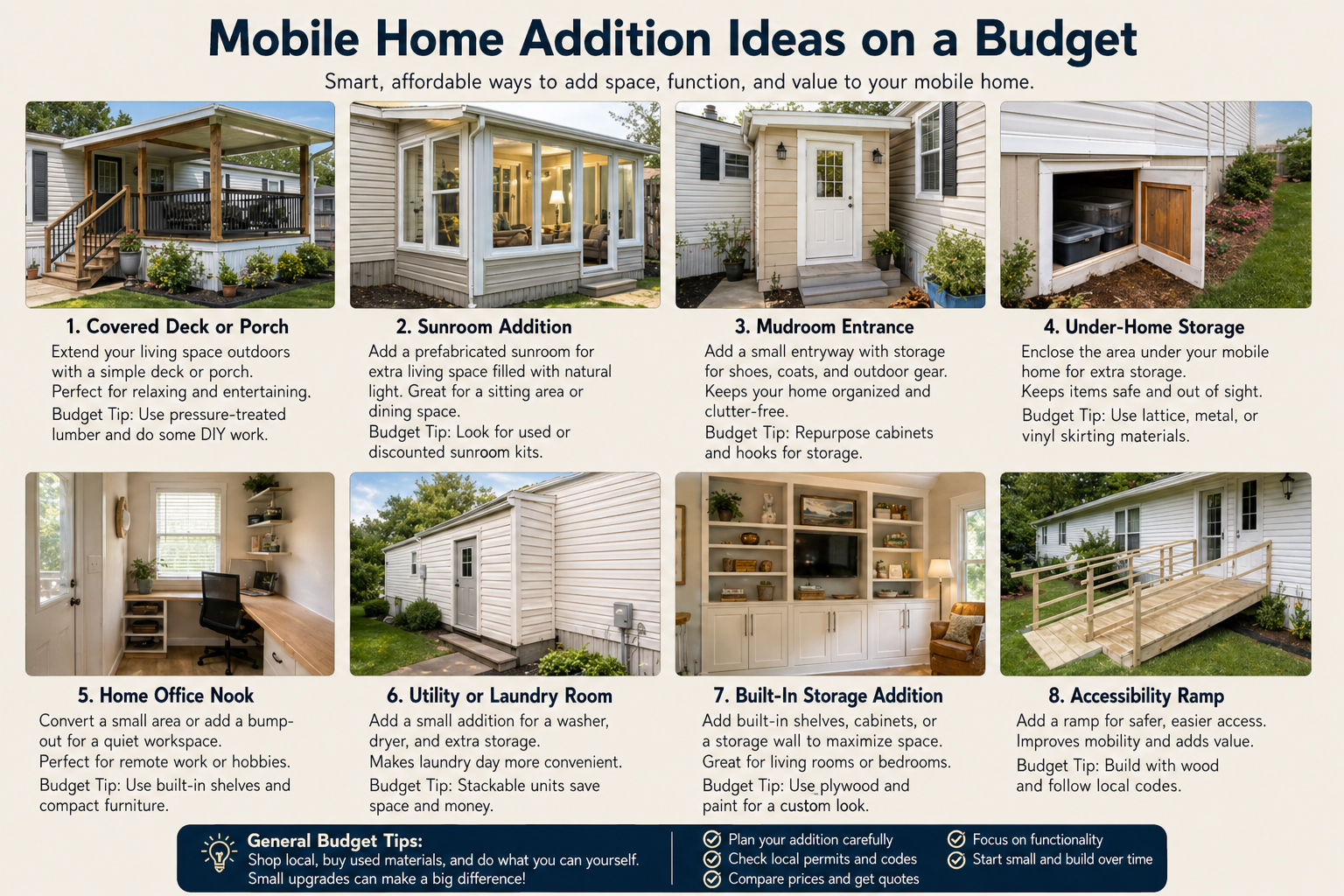
Painting your mobile home — interior or exterior — is one of the most cost-effective DIY projects you can do. The prep work (cleaning, priming) takes more time than the actual painting, but it’s what determines whether the job lasts two years or ten. The short version: bond primer first, 100% acrylic latex paint second, two coats minimum. Get that right and the color choice is the fun part. If you found this guide helpful, check out our 10 budget-friendly ideas to transform your mobile home into a cozy haven for more upgrade ideas, and be sure to read our guide on the best flooring for mobile homes to complete your renovation!

3 comments