If you’ve been scrolling through home design feeds wondering how people turn boring drywall into something that looks like it belongs in an architect’s portfolio, board and batten is almost always the answer. It’s one of the highest-impact, lowest-cost upgrades in the entire DIY world — and in 2026, it’s absolutely everywhere.
The concept is simple: flat boards (the “boards”) create a frame, and narrow strips (the “battens”) cover the seams and add rhythm. The result? A wall that looks like it cost thousands but can realistically be done for under $200 in materials on a Saturday.
This guide walks you through 15 distinctive ways to use board and batten, gives you exact 2026 material costs, a step-by-step installation guide, and specific advice for mobile home owners. Let’s build something beautiful.
15 Board and Batten Accent Wall Ideas (Ranked by Room)
Here are the 15 most effective board and batten configurations in 2026, covering every room, budget level, and skill set.
Classic White Living Room Floor-to-Ceiling Grid
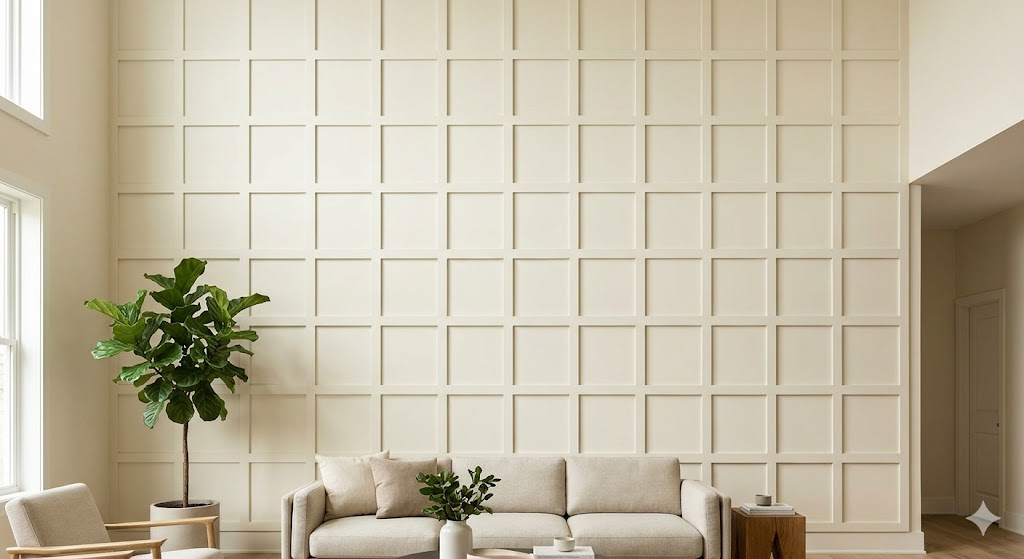
A full floor-to-ceiling batten grid pulls the eye upward and creates rich shadowing that makes flat drywall look custom-built. Avoid clinical bright whites — opt for warm creams like Benjamin Moore Swiss Coffee or Sherwin-Williams Alabaster so the room stays inviting rather than sterile. Plan your grid carefully around windows, outlets, and HVAC registers before cutting a single board.
Moody Bedroom Half-Wall Wainscoting
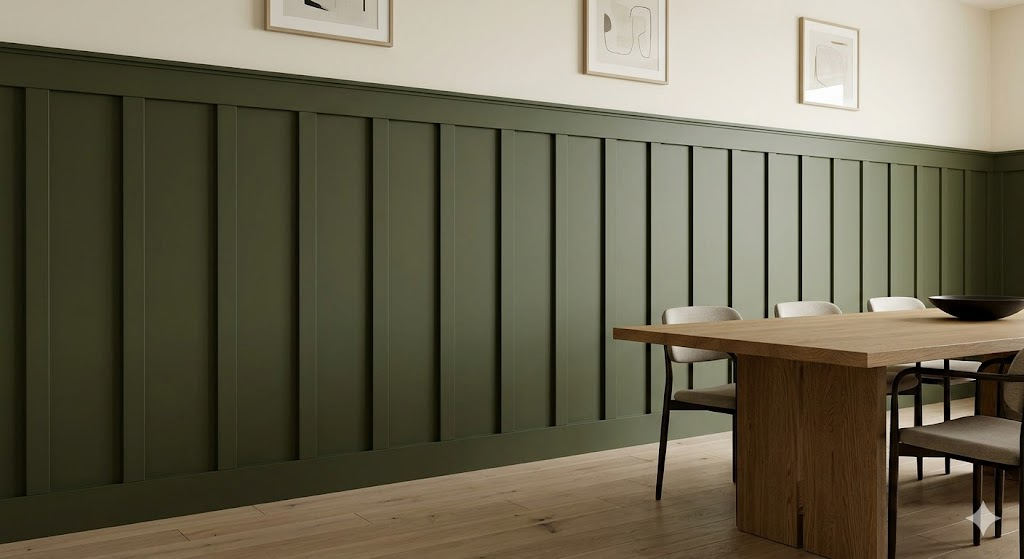
Paint the lower half of your bedroom walls in a deep jewel tone — Hale Navy, Peppercorn, or dark charcoal — and let the battens wrap the whole room. The horizontal top rail acts as an architectural headboard, anchoring the space. Critical tip: make sure the rail sits clearly above or below the actual headboard height to avoid visual collision.
Nursery Ledge Accent
A lower-third installation with a slightly extended top ledge lets you display artwork and books that swap out as your child grows — no patching drywall holes every six months. Use soft, organic palettes like pale sage or muted terracotta. Critical safety note: anchor the ledge into structural studs with construction screws, not just brad nails — toddlers will pull on it.
Moisture-Resistant Bathroom Coastal Profile
Tall vertical battens without horizontal cross-rails visually vault a small bathroom ceiling. Pair crisp Pure White or Chantilly Lace millwork against soft sea-glass greens above the rail. Never use standard MDF in bathrooms — humidity will cause it to swell and degrade within months. Use cellular PVC or heavily sealed pine only.
High-Impact Entryway Mudroom
Board and batten + coat hooks + a built-in bench = an instant, defined mudroom zone from nothing. Use forgiving dark shades like Cracked Pepper or Iron Mountain that hide scuffs from shoes and backpacks. Fasten your hook rail directly into studs — it will carry real weight. For more entryway inspiration, check out our guide on creative entryway ideas to maximize tiny spaces.
Stepped Diagonal Staircase Ascent
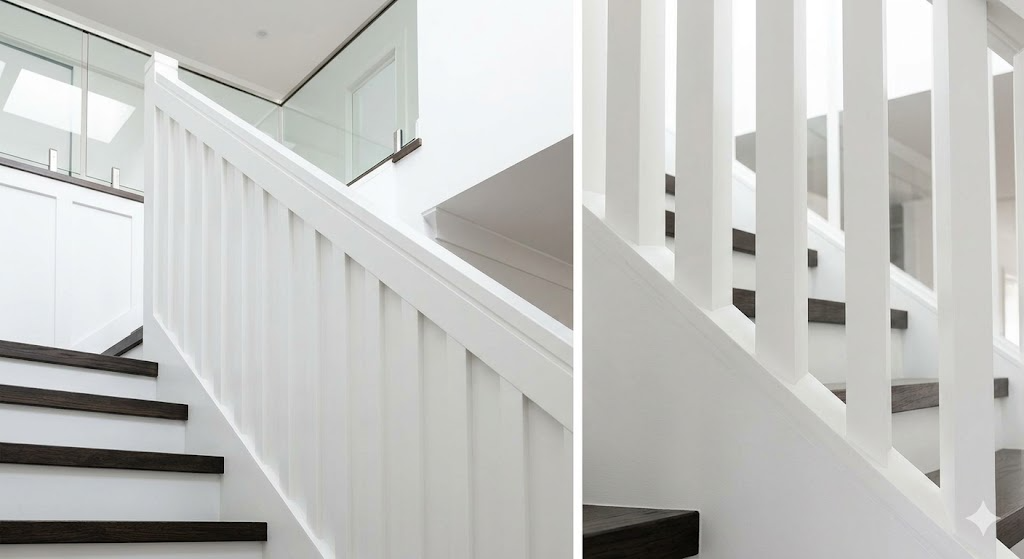
Running battens up a staircase wall creates a dramatic geometric contrast between the plumb vertical boards and the diagonal pitch of the stairs. Use a unifying color like Chantilly Lace to maintain flow between floors. Every single batten needs a custom miter cut at the bottom to sit flush on the angled base rail — this is a job for someone comfortable with a compound miter saw.
Formal Dining Room Two-Thirds Grid
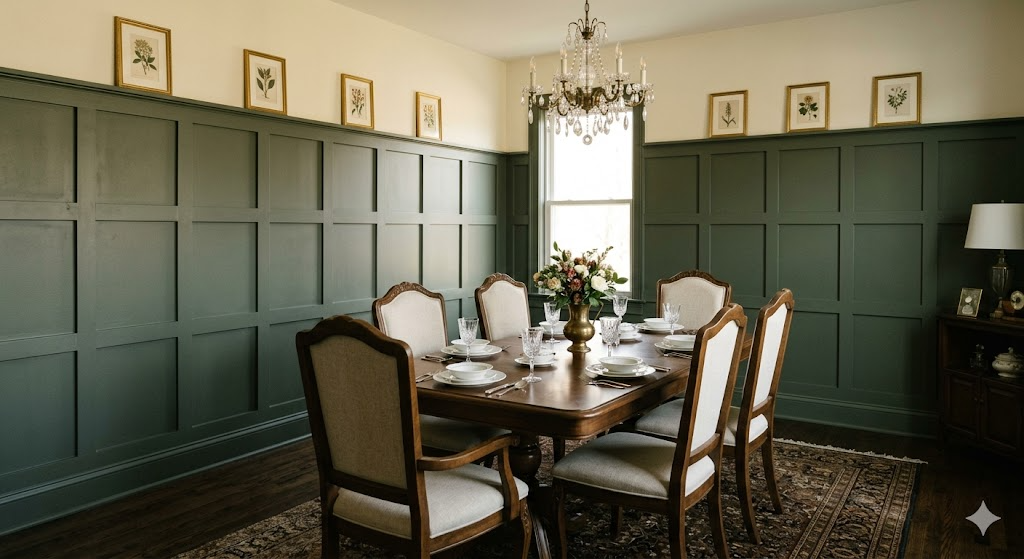
A high wainscoting grid at two-thirds wall height creates the enclosure and warmth of a historic dining room — and provides minor acoustic dampening from hard floors and silverware echo. Try Pewter Green, Evergreen Fog, or deep clay. Plan the top rail height mathematically so it sits distinctly above or below the chair backs, never at the exact same height.
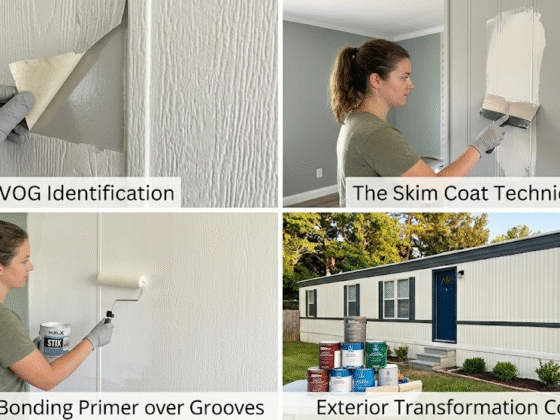
Lightweight Mobile Home VOG Overlay
Board and batten placed directly over the vertical seams of VOG panels instantly transforms a factory-produced interior. Use warm neutrals like Accessible Beige or Revere Pewter to maximize light in a narrower footprint. Never use long fasteners — the thin wall cavities hide wiring just millimeters behind the surface. Rely on construction adhesive as your primary hold. See our full mobile home remodel ideas on a budget for more projects like this.
Vertical Fireplace Hearth Surround
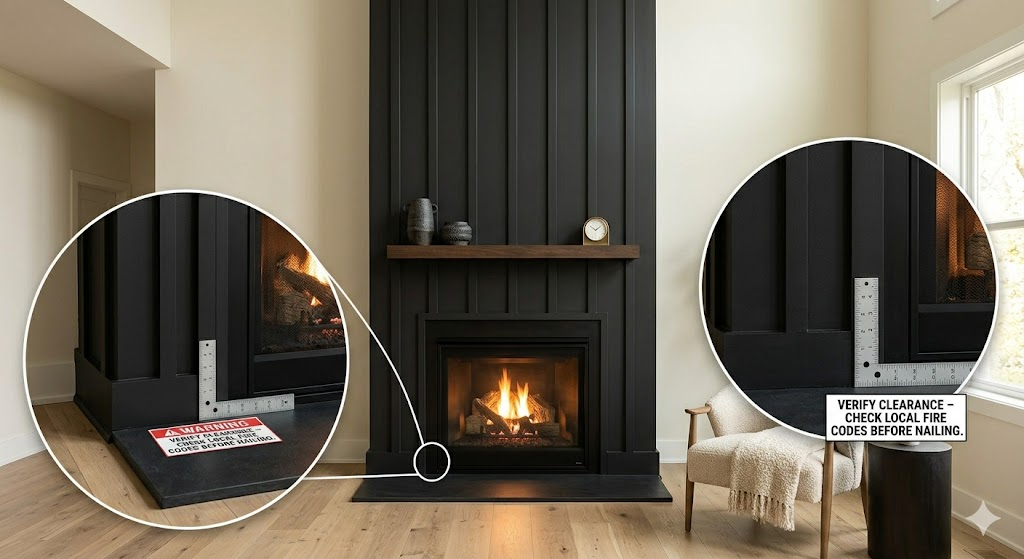
Cladding a chimney breast in vertical board and batten modernizes an outdated brick fireplace for a fraction of the cost of masonry demo. Deep blacks like Tricorn Black or Black Fox are ideal — they hide soot and make the firebox pop. Absolutely check local fire codes for required clearance distances from the firebox opening before you nail a single board.
Horizontal Board and Batten (Modern Twist)
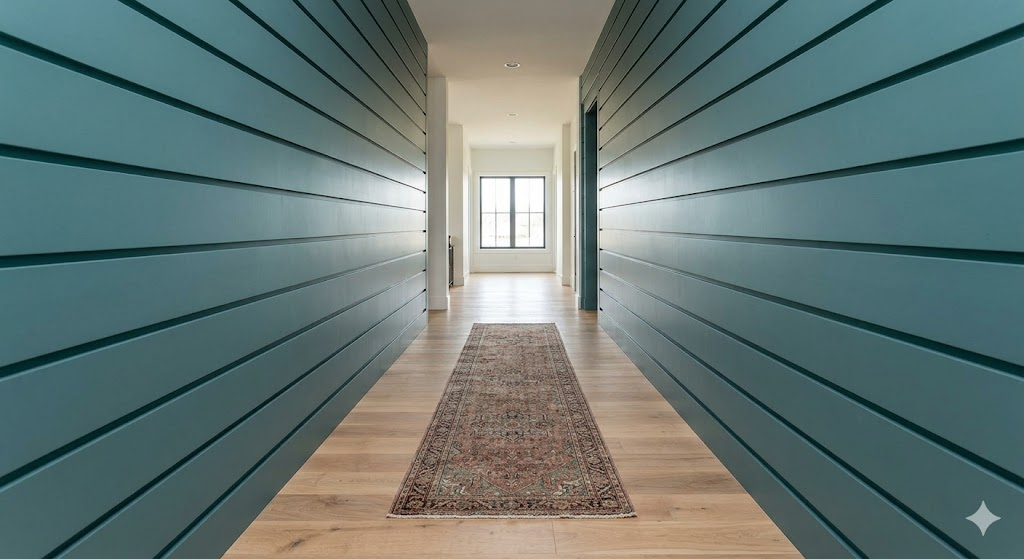
Flip the battens horizontal to visually push walls outward and widen narrow rooms. Great with bold, unexpected colors like Aegean Teal or Dragonfly. The catch: residential floors are almost never perfectly level, so you cannot measure down from the ceiling. A cross-line laser level is non-negotiable for every single board in this application.
High-Contrast Two-Tone Split Horizon
Use the top rail as a horizon line: deep, heavy color on the lower battens (try Urbane Bronze or Olive Grove), light airy white above. Follows the 60/30/10 layering principle perfectly. The make-or-break detail is the transition line — use premium painter’s tape and caulk the top rail edge completely before painting the upper wall or the darker color will bleed upward.
Board and Batten with a Picture Ledge
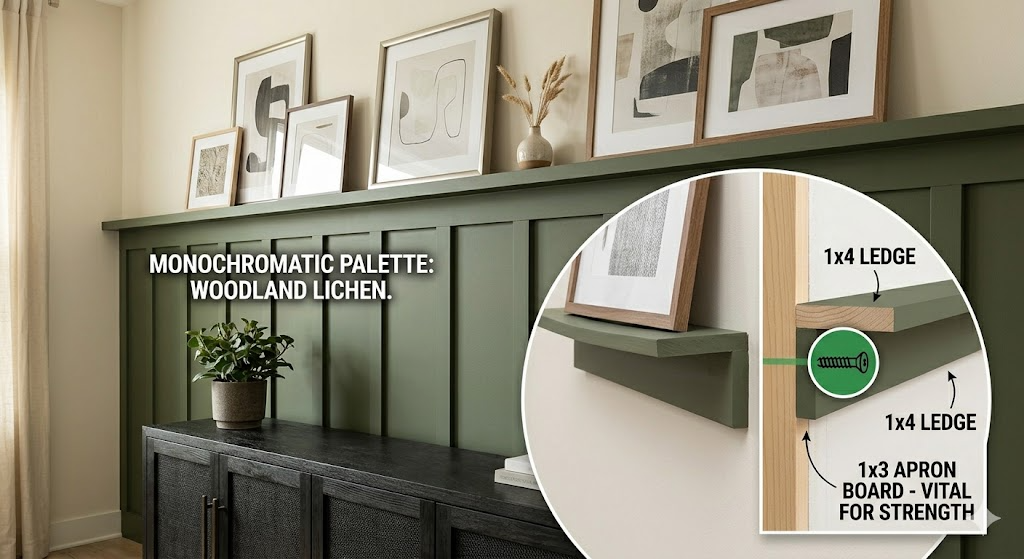
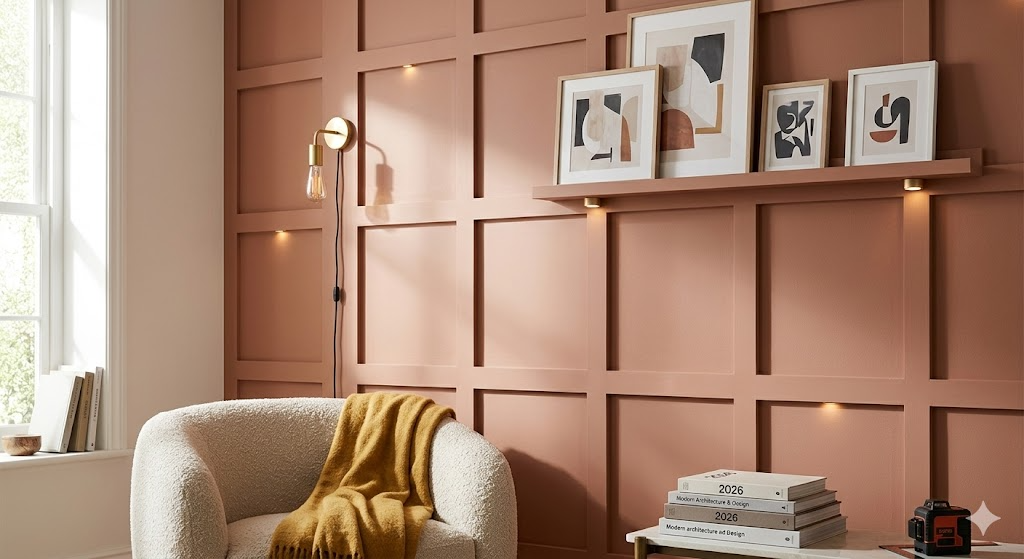
Extend the top rail depth to create a functional gallery shelf — perfect for homeowners who constantly rotate artwork without drilling new holes. A monochromatic palette (everything the same color, like Woodland Lichen) lets the art be the star. Support the ledge with a vertical apron board underneath; a floating 1×4 alone will bow under the weight of glass-frame art.
Integrated Plug-In Sconces
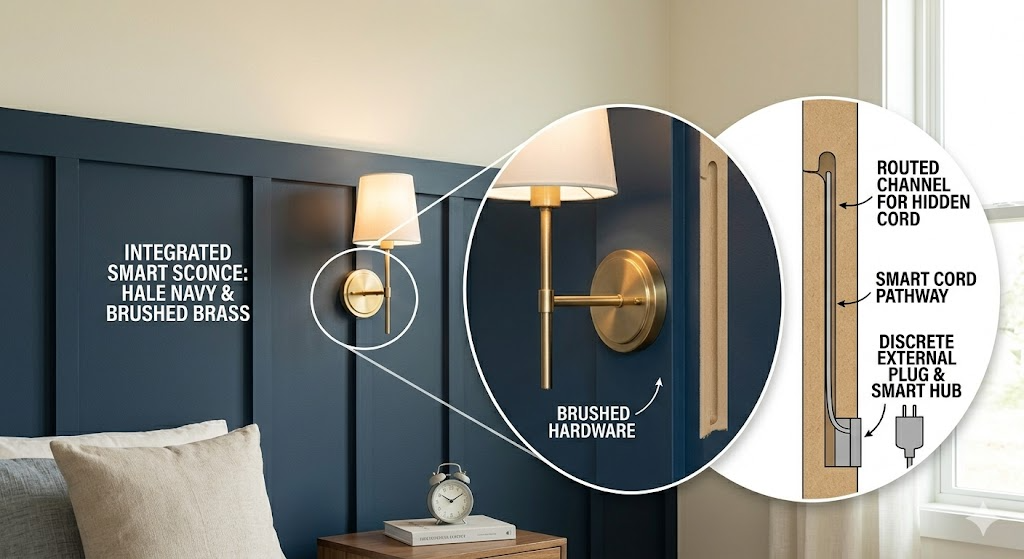
Mount smart plug-in sconces directly onto the vertical battens for hardwired-looking ambient lighting at a fraction of the electrician cost. Dark bases like Hale Navy or Forest Green make brushed brass hardware pop brilliantly. Route cords down the batten edge or channel a small groove in the back of a thicker MDF batten to hide the cord completely for a truly professional finish.
Weather-Resistant Exterior Porch Facade
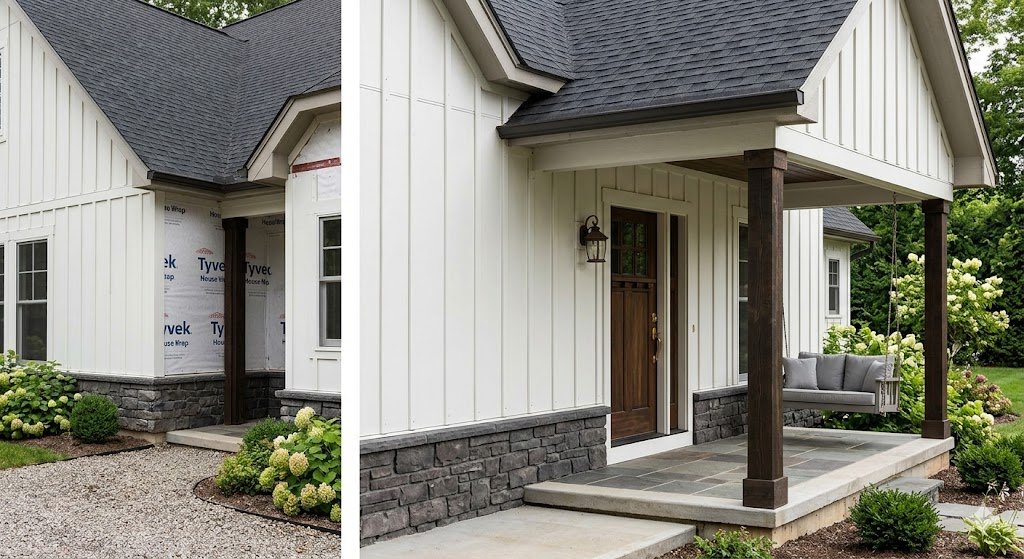
Exterior board and batten dramatically elevates curb appeal and connects your indoor-outdoor design story. Use fiber cement boards (James Hardie HardieTrim) or exterior-grade vinyl — never interior MDF or raw pine outdoors. Install over proper house wrap with galvanized or stainless fasteners only. This is one application worth calling a pro for if you’re not experienced with exterior work.
Shiplap + Board and Batten Combo
Board and batten on the lower half, nickel-gap shiplap on the upper half — two textures, one unified color. Paint both profiles identically (try Chantilly Lace or Revere Pewter) so the physical shadows of the wood gaps provide contrast rather than competing colors. Critical detail: the top rail must be physically thicker than the shiplap panels above it, or you’ll create an ugly upside-down ledge.
Board and Batten Inspiration Photos
Sometimes you just need to see it. Here are real-world examples of each style to help you visualize what’s possible in your own space.


💡 Tip: Upload your own finished photos to inspire other readers — drop them in the comments below!
Real 2026 Cost Breakdown: What You’ll Actually Spend
One of the biggest reasons board and batten is so popular is the absurdly good cost-to-impact ratio. Here’s what materials actually cost in 2026.
Material Cost Per Linear Foot
| Material | Size | Cost / Linear Ft | Best For |
|---|---|---|---|
| Primed MDF | 1×3 | $0.98 – $1.43 | Standard battens, dry rooms |
| Primed MDF | 1×4 | $1.10 – $1.13 | Top rails, wider battens |
| Solid Pine / Poplar | 1×3 | $1.68 | Stained finishes, high-traffic |
| Solid Pine | 1×4 | $2.28 – $2.48 | Structural rails |
| Cellular PVC | 1×3 & 1×4 | $1.60 – $2.05 | Bathrooms, basements, exterior |
Consumables for One Wall (Average)
| Item | Cost |
|---|---|
| Premium interior paint (1 gallon) | $50 – $80 |
| Primer (1 quart, if needed) | ~$20 |
| Paintable acrylic latex caulk (2–3 tubes) | ~$12.84 |
| 18-gauge brad nails (1,000 ct box) | $3.50 – $5.30 |
| Total Consumables | $86 – $118 |
Total Project Cost: 12-Foot Accent Wall
Using a standard 12-foot wide, 48-inch tall installation (~64 linear feet of primed MDF):
| Cost Category | DIY (Primed MDF) | Hire a Contractor |
|---|---|---|
| Lumber & Millwork | $70 – $85 | Included in rate |
| Paint & Consumables | $86 – $118 | Included in rate |
| Labor | $0 (your time) | $1.75 – $7.00 / sq ft |
| Total | $156 – $203 | $300 – $1,350+ |
A “1×3” board is actually only 2.5 inches wide — not 3. On a 10-foot wall, 16-inch spacing needs just 8 vertical boards; 12-inch spacing needs 11. Always calculate with the true width or your layout will drift off by the last panel.
Step-by-Step DIY Installation Guide
Board and batten is beginner-friendly, but the difference between a professional result and a rushed weekend project comes down to a handful of non-negotiable steps.
Step 1: Plan Your Heights and Spacing
Standard wainscoting height is 36–42 inches, but modern board and batten is commonly taken to 48, 60, or 72 inches. Critical: 48 inches from the floor is exactly where residential codes place light switch plates. Aim for 44 inches (just below) or 54 inches (safely above) to avoid awkward notch cuts.
Step 2: Find and Mark Every Stud
Use a magnetic stud finder that detects metal drywall screws — far more reliable than basic models. Mark each stud line with painter’s tape running vertically so you can see it throughout the whole installation.
Step 3: Install Horizontal Rails First — Always
Never install vertical battens first. Residential floors are almost never level. If battens rest on an uneven floor, your top rail will look wavy. Install horizontal rails first with a laser level, then measure and cut each batten individually to fit snugly between them.
Step 4: Fasten Correctly for Your Material
For MDF: 18-gauge brad nailer with 1.5–2-inch nails plus construction adhesive between studs. For solid pine: 16-gauge 2–2.5-inch finish nails driven into studs — pine is heavier and can twist over time if not properly anchored.
Step 5: Handle Corners Correctly
For inside corners, push one batten flush into the corner and butt the adjacent batten against its face at 90°. For outside corners, miter both boards at 45°. Be careful not to fire nails into the hidden metal corner bead beneath the joint compound — it can cause the nail to ricochet dangerously.
Step 6: Caulk Every Single Seam
This step separates a DIY look from a built-in look. Apply paintable acrylic latex caulk at every point where wood meets drywall. Smooth it with a wet finger before it skins over. Never use 100% silicone caulk — it cannot be painted over.
Step 7: Prime, Then Paint
For raw pine, prime first to seal knot sap. For primed MDF, a light scuff-sand and one coat of acrylic urethane enamel is all you need. Paint the wall, battens, and rails all the same color in one pass for a truly built-in look.
If your walls have “knockdown,” “orange peel,” or “skip trowel” texture, it will show painfully in the open panels between battens. Install 1/8-inch hardboard backer panels or skim-coat the entire area with joint compound before you start.
Board and Batten in Mobile Homes: What’s Different
Mobile and manufactured homes present unique challenges — but board and batten absolutely works, and the results are stunning. Here’s what you need to know before you start.
Stud Spacing Is Unpredictable
Unlike stick-built homes with consistent 16-inch framing, manufactured homes have irregular stud placement — especially around windows, doors, and marriage lines in double-wides. Find and mark every stud manually. Never rely on mathematical guessing.
Thin Walls Mean Short Fasteners Only
Mobile home VOG panels are only 5/16 to 1/4 inch thick — far thinner than standard drywall. Wall cavities are shallower, often built with 2×3 framing. Standard 2-inch nails risk piercing Romex wiring or PEX plumbing just millimeters behind the surface.
Use 1-inch or 1.25-inch brad nails maximum — for tacking only. Your real holding strength comes from high-strength polyurethane construction adhesive (like Liquid Nails) applied generously to the back of every board. Let the adhesive do the structural work.
Use Lightweight MDF, Not Solid Pine
Older mobile home framing is engineered to strict weight tolerances. Pre-primed MDF delivers the same crisp finish at a fraction of the weight — the right choice for manufactured housing. For more guidance, read our posts on the best paint for mobile home walls, how to paint mobile home walls without peeling, and our guide to the best flooring for mobile homes.
Tools you’ll need for this project


As an Amazon Associate we earn from qualifying purchases — at no extra cost to you.
Frequently Asked Questions
Standard spacing is 12 to 16 inches, measured center-to-center. The 16-inch spacing aligns with standard wall studs, giving every batten a solid anchor. Always calculate from your total wall width so panels are symmetrical at both ends.
For a 9-foot ceiling, aim for one-third (36 inches) or two-thirds (72 inches) of total wall height. Avoid stopping at exactly 48 inches — that’s where light switch plates live.
Absolutely. In 2026 it has evolved beyond stark white farmhouse. The trend now leans toward rich earth tones, moody darks, and layered architectural environments — far more intentional and design-forward than the Pinterest farmhouse era.
Yes — and a single accent wall often delivers the highest cost-to-impact ratio. One wall behind a bed, fireplace, or media console creates a powerful focal point without overwhelming the room.
Wainscoting is the broad term for any decorative wood paneling on the lower portion of a wall. Board and batten is one specific pattern within that category. So board and batten is always wainscoting, but wainscoting isn’t always board and batten.
For a standard straight-wall interior installation, no. Hire a professional for staircases, vaulted ceilings, or exterior work. Everything else on this list is well within a motivated DIYer’s reach on a weekend.
It depends on your lease. Most landlords classify it as a permanent modification. There are temporary alternatives like peel-and-stick trim panels though. Check out our renter-friendly apartment transformation tips for ideas that won’t cost you your security deposit.
Final Thoughts
Board and batten is one of the rare DIY projects where the gap between “beginner with a weekend” and “professional contractor result” is genuinely narrow. For $156–$203 in materials, you can add architectural depth and character to a room that flat drywall simply cannot match.
Pick one wall. Start with the horizontal rails. Keep your laser level handy. Caulk every single seam. Then stand back and wonder why you didn’t do this sooner.
Have questions about your specific installation? Drop them in the comments — we love helping fellow DIYers through the details.