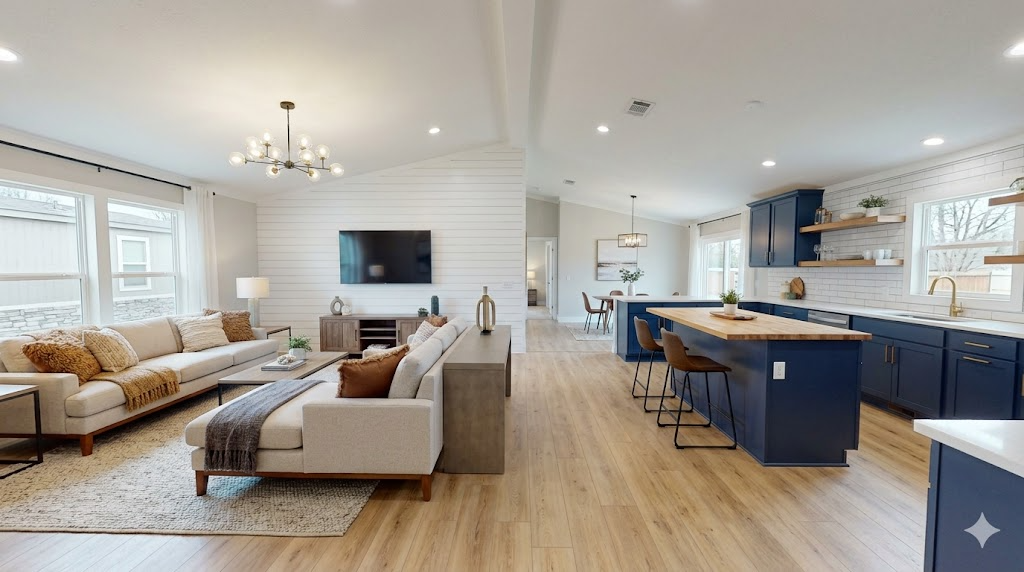
If you own a double wide mobile home and feel like it doesn’t look the way it should — you’re not using the space you actually have. A standard double wide runs 24–32 feet wide and up to 90 feet long, giving you 1,000 to 2,560 square feet of interior space. That’s a three-bedroom site-built house footprint.
This guide covers 50 specific transformations, room by room, with real 2026 costs and mobile-home-specific techniques that actually work on VOG walls, particleboard subfloors, and the marriage wall that runs down the center of every double wide.
Jump to a section
What makes a double wide different — and why it matters for decorating

Before spending a dollar, you need to understand three things about your home that no generic decorating guide will tell you.
The VOG wall problem. Almost every double wide built before 2010 has Vinyl Over Gypsum (VOG) walls — a thin gypsum core covered with shiny vinyl laminate, with vertical plastic batten strips over the expansion joints. Standard latex paint won’t bond without a bonding primer. Standard drywall mud will crack at the seams because the home flexes. Full prep and paint process: how to paint mobile home walls without peeling.
The marriage wall. The central spine where your two halves meet is load-bearing. It supports the roof ridge beam. You cannot remove it without a structural engineer and steel I-beam. What you can do is transform it — five specific techniques below.
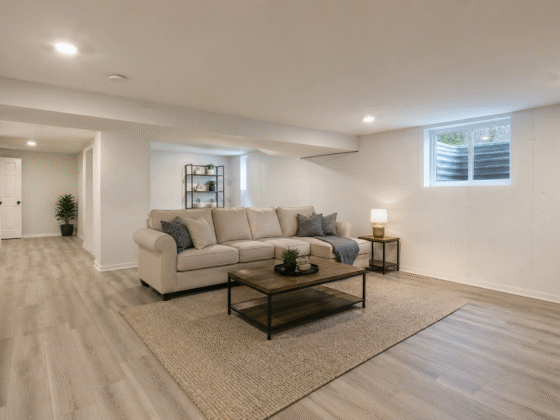
The open floor plan advantage you’re probably not using. A site-built home costs $20,000–$50,000 to open up by removing walls. Your double wide came with open concept built in. Float furniture toward the center, use rugs and lighting to define zones, and the home feels like a high-end loft — not a trailer.
| Feature | Single wide | Double wide |
|---|---|---|
| Width | 12–18 ft | 20–36 ft (24–32 avg) |
| Length | 40–80 ft | 32–90 ft |
| Square footage | 500–1,300 sq ft | 1,000–2,560 sq ft |
| Transport | 1 section | 2 sections |
| Layout style | Linear / narrow | Open concept |
The marriage wall: what it is and how to fix it

The marriage wall is where the two factory-built halves of your home were bolted together on-site. It’s significantly thicker than any other interior wall, carries the full weight of your roof, and the seam is visible as a vertical line running floor to ceiling.
⚠️ Why painting and mudding always fails. The two halves settle independently over time — even on a permanent footing. Temperature changes cause the steel chassis to flex. Any rigid joint compound applied over that seam cracks within one to two seasons. Standard latex paint also won’t adhere to the adjacent VOG vinyl without bonding primer first.
Five techniques that actually work
Can you remove the marriage wall? Technically yes, but it requires a structural engineer, licensed contractors, and a steel I-beam or LVL beam to carry the roof load. Budget $8,000–$20,000 minimum. Never a DIY project.
Living room transformations (ideas 1–10)

Wrap the marriage wall in shiplap
$400–$800 · IntermediateInstall horizontal tongue-and-groove pine or MDF shiplap across the full marriage wall. Hides the seam completely while introducing premium site-built texture. Use construction adhesive plus 18-gauge brad nails — this allows the cladding to flex with the chassis without cracking over time.
Float your furniture
FREE · BeginnerPull all seating away from the walls and create a conversation zone in the center of the room. Double wides are wide enough to do this without blocking walkways. Furniture against every wall is the single most common mistake that makes a large double wide feel cramped and narrow.
Add a console table behind the sofa
$80–$250 · BeginnerWhen your sofa is floated in the center, place a long console table directly behind it. This defines room zones, gives you a surface for task lighting, and prevents the sofa back from hanging awkwardly in open space. Anchors the grouping and provides a visual divider between living and dining areas.
Build a board and batten accent wall
$150–$300 · IntermediateChoose one focal wall and install a board and batten grid. This hides existing VOG batten strips, creates architectural depth, and provides a smooth surface that accepts high-adhesion paint cleanly. Full DIY guide: board and batten accent wall ideas.
Replace factory lighting first
$60–$200 per fixture · BeginnerFactory flush-mount lights are the fastest change for maximum visual impact. Replace with a large multi-bulb chandelier, semi-flush drum fixture, or statement pendant. In a double wide with 8–9 foot ceilings, a proper overhead fixture immediately signals custom home — not mobile home.
Install T-molding at the marriage line
$20–$40 · BeginnerInstall a color-matched T-molding directly over the marriage line gap in your flooring. Use polyurethane construction adhesive and leave a mandatory 1/4-inch expansion gap. Skipping this causes LVP to buckle as the two chassis halves settle. Full flooring guide: best flooring for mobile homes.
Replace factory baseboards
$1.50–$3/linear ft · IntermediateFactory baseboards are typically 2–3 inches — minimum coverage for VOG panel gaps. Replace with 5-inch primed pine baseboards. This single change makes every room look site-built. Grounds the walls, covers flooring edge gaps, and adds substantial visual weight at floor level.
Add faux ceiling beams
$200–$500 · BeginnerLightweight polyurethane faux beams add architectural character without dangerous roof truss dead load. Span three beams across the living room ceiling to highlight the impressive height of a modern double wide. More remodel ideas: mobile home remodel ideas on a budget.
Remove non-structural partition walls
$0–$200 · IntermediateMany double wides have single-layer partition walls between the living room and hallways that are non-load-bearing. Removing these opens sightlines and maximises the open concept layout. Always verify with a stud finder and confirm no electrical runs inside before demolition.
Create a faux entryway
$100–$300 · BeginnerDouble wides often open directly into the living space with no defined entry. Place an area rug at the door, add a bench with hooks, and position a slatted wood room divider perpendicular to the entry path to define the threshold and stop the living room feeling like a corridor.
Kitchen upgrades (ideas 11–20)

TSP clean and repaint cabinets
$80–$150 · BeginnerDegrease with Trisodium Phosphate, apply INSL-X Stix bonding primer, then brush-apply cabinet enamel. Factory-smooth finish for under $150 without replacing a single cabinet door. The cheapest kitchen transformation available.
Add a freestanding island on casters
$200–$600 · BeginnerA butcher block island on locking casters adds prep space and storage without touching plumbing or electrical. Double wides have the width to accommodate standard 36-inch walkway clearances on all sides — you genuinely have room for this.
Install a fixed permanent island
$1,500–$4,000 · AdvancedBuild a permanent island hardwired for pop-up outlets and optionally plumbed for a prep sink. This is the upgrade that most dramatically closes the gap between a manufactured home kitchen and a site-built one.
Peel-and-stick backsplash
$80–$150 · BeginnerPremium vinyl gel tile backsplashes apply directly to VOG walls without mortar or cement board. They flex with wall movement and install in an afternoon. Best option for VOG surfaces — no bonding failures, no cracked grout. More VOG prep tips: best paint for mobile home walls.
Real tile on VOG — with the right adhesive
$300–$800 · AdvancedScuff the VOG vinyl lightly with 80-grit sandpaper, apply a bonding primer, then set tile using polymer-modified flexible thinset. Never standard mastic — it will fail as the home moves. The flexible thinset accommodates micro-movement without cracking grout.
Upgrade appliances in the right order
$600–$2,000 · BeginnerRefrigerator and dishwasher first — most visible and best energy savings. ENERGY STAR models reduce utility costs 15–30% annually. Check door swing clearances — modern appliances are often deeper than the models they replace and may need minor cabinet trimming.
Hardware modernisation sweep
$25–$80 · BeginnerReplace plastic factory cabinet pulls with oversized brushed nickel or matte black bar pulls. A 30-piece pack costs $30–$50. Best cost-to-impact ratio of any kitchen upgrade — 20 minutes with a screwdriver that transforms the whole room.
Open shelving conversion
$100–$300 · IntermediateRemove upper cabinets flanking the stove or sink and replace with thick floating wood shelves mounted into structural studs. Breaks up factory cabinet monotony and aligns with the open, airy kitchen aesthetic dominating 2026 design trends.
Resurface countertops with epoxy
$100–$250 · IntermediateAn epoxy pour kit over existing laminate creates a marble or granite effect that chemically bonds to the surface and seals all laminate joints against moisture — the main cause of particleboard counter rot in manufactured homes.
Replace with quartz or butcher block
$800–$2,500 · AdvancedBoth are lighter than stone, easier to install, and provide a dramatic improvement over factory laminate. Butcher block is particularly forgiving on mobile home countertop dimensions which often differ from standard site-built widths.
Master bedroom enhancements (ideas 21–28)

Create a dedicated sitting zone
$300–$800 · BeginnerA double wide master is wide enough for a distinct lounging area at the foot of the bed. A chaise lounge or two armchairs anchored by a secondary area rug creates a hotel-like retreat that uses your square footage properly.
Build a home office corner
$200–$600 · BeginnerThe generous footprint supports a seamless desk setup in a corner of the master suite. A low bookcase or decorative room divider creates psychological separation between workspace and sleep area without permanent construction.
Install a floor-to-ceiling modular wardrobe
$400–$1,200 · IntermediateMobile home closets are notoriously shallow. An IKEA PAX system or similar installed along a blank perimeter wall vastly increases storage capacity and mimics custom built-in millwork without touching the home’s framing.
Add smart dimmers
$25–$60 per switch · BeginnerSmart dimmer switches on LED overhead fixtures cost under $30 each and take 15 minutes to install. Evening dimmed lighting effectively masks VOG wall batten strips and creates an atmosphere no flush-mount factory fixture can match.
Install LED accent lighting strips
$40–$120 · BeginnerBattery or low-voltage LED strips under closet shelving, inside wardrobes, and behind the headboard provide sophisticated layered lighting without running new wire through shallow mobile home wall cavities.
Grasscloth wallpaper accent wall
$150–$300 · IntermediateDark moody grasscloth behind the bed hides VOG seams completely, adds texture, and improves acoustic privacy. Prime the VOG with bonding primer first. More accent wall options: board and batten accent wall ideas.
Replace ceiling fan with pendant
$80–$300 · BeginnerAn oversized woven rattan or bamboo pendant above the center of the bed acts as a powerful visual anchor and signals intentional design choices. Removes the generic rental look instantly.
Mount curtains at the ceiling line
$40–$100 · BeginnerInstall curtain rods as close to the ceiling as possible with floor-length panels. This vertical line makes 8-foot ceilings feel 10 feet tall. One of the most effective optical tricks in interior design and particularly impactful in manufactured homes.
Bathroom modifications (ideas 29–36)

Key warning before starting any bathroom work: Mobile home plumbing routes through the floor, not the wall. Vanity replacement often requires subfloor modifications. Tub removal frequently means removing an interior wall. Always measure your existing fixtures before ordering replacements — mobile home dimensions differ from site-built standards.
Replace the 54×27 tub surround
$200–$600 · IntermediateManufactured homes use non-standard 54×27-inch tubs. Always buy a replacement surround engineered for mobile home dimensions — standard big-box surrounds require wall reframing to fit. Direct-fit fiberglass or ABS plastic surrounds install in a day without demo.
Convert to a walk-in shower
$1,500–$4,000 · AdvancedRemoving an oversized corner garden tub and installing a low-threshold walk-in shower with frameless glass doors visually doubles the bathroom’s perceived size. The highest-impact bathroom upgrade for a double wide and consistently increases resale appeal.
Repaint the vanity instead of replacing it
$50–$100 · BeginnerMobile home plumbing routes through the floor — replacing a vanity often requires subfloor modifications. Save money by sanding and repainting the vanity base and replacing only the sink basin and countertop surface.
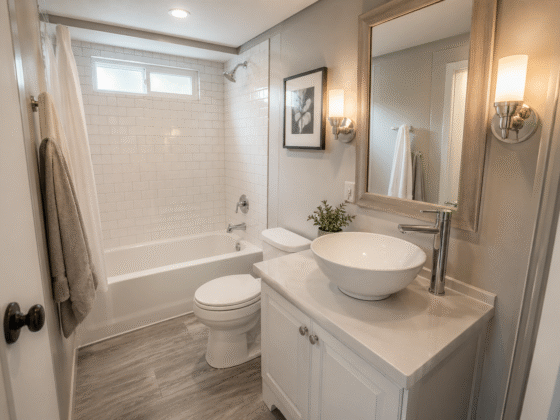
Install a floating wall-mounted vanity
$400–$1,200 · AdvancedA floating vanity exposes the floor underneath and makes the room feel larger. Must be anchored into structural studs — VOG panels cannot support the weight alone. Use an electronic stud finder before drilling.
Epoxy tub restoration
$60–$100 · IntermediateA marine-grade epoxy kit repairs chips, cracks, and yellowing for under $100. Avoids the major demolition required to physically remove a mobile home tub — which often means removing an interior wall just to get the old tub through the hallway door.
Frame the mirror and add wall sconces
$100–$300 · BeginnerRemove the factory plate glass mirror and replace with a framed decorative mirror flanked by wall sconces. Eliminates harsh downward vanity shadows and brings the bathroom in line with modern design standards immediately.
Add vertical storage above the toilet
$40–$150 · BeginnerAn étagère or floating shelf unit above the toilet uses dead vertical space. Mobile home bathrooms have almost no linen or toiletry storage — this solves it without touching any plumbing or walls.
Upgrade faucets and showerheads
$40–$200 · BeginnerReplace leaky plastic factory fixtures with quality brass or brushed nickel alternatives. When replacing drain hardware, match the specific P-trap size required by your mobile home’s subfloor configuration — these often differ from site-built dimensions.
Exterior enhancements (ideas 37–43)

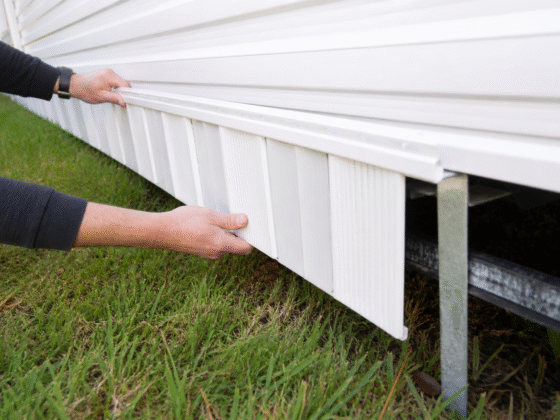
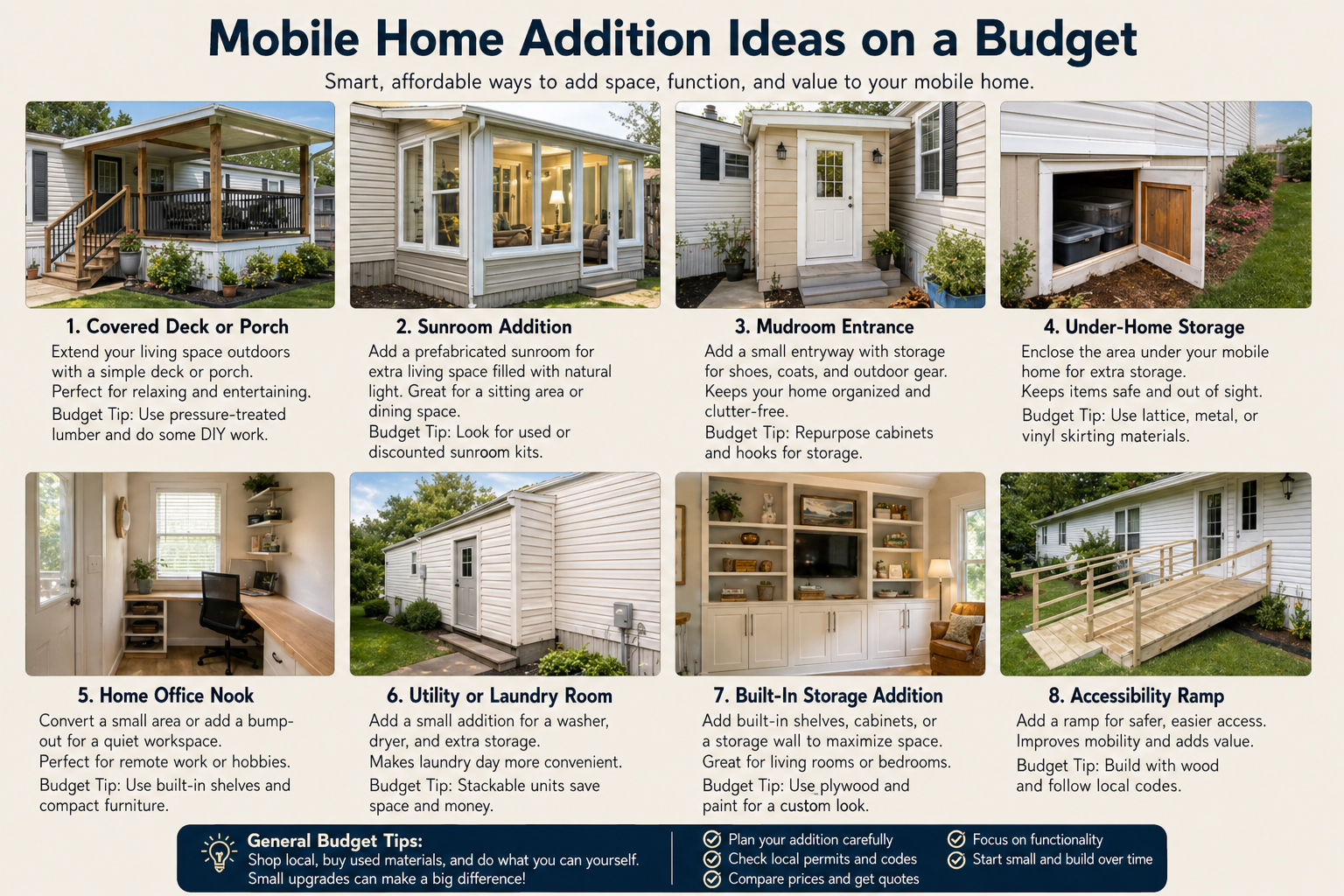
High-density faux stone skirting
$600–$1,500 · IntermediateReplace brittle vinyl skirting with polyurethane panels moulded to look like river rock, fieldstone, or brick. Protects the underbelly plumbing from weather and rodents while transforming the most “manufactured” looking feature of any mobile home. Pairs with underbelly insulation: mobile home insulation guide.
Build a deck or covered porch
$3,000–$12,000 · AdvancedA substantial composite or treated wood deck anchors the home to the land and yields close to 95% ROI. Must be built freestanding from the chassis — attaching a heavy deck directly to the steel frame can pull the home out of level over time.
Foundation planting and landscaping
$200–$800 · BeginnerDrought-tolerant foundation shrubs, ornamental grasses, and mulched beds in front of the skirting hide the elevation gap and visually root the home to the property. Consistently delivers over 100% ROI at resale for minimal outlay.
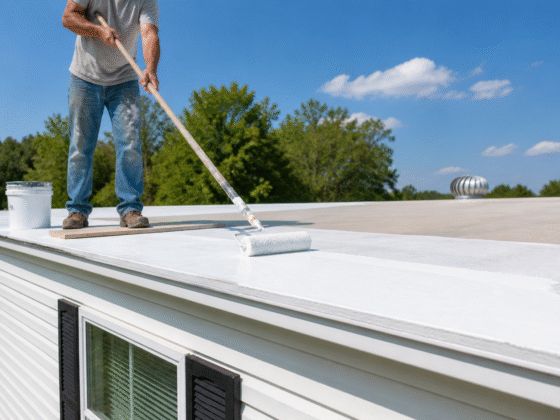
Roof-over installation
$8,000–$20,000 · Professional onlyBuild a new pitched truss system directly over the existing flat or low-pitch roof, covered in architectural shingles or standing seam metal. Prevents leaks, improves thermal insulation, and dramatically improves curb appeal. Essential for older double wides with failing original roofs.
Steel or fiberglass entry door
$400–$1,200 · IntermediateReplace the flimsy factory front door with a heavy-duty steel or fiberglass unit. Returns 188–216% at resale according to 2026 Cost vs. Value data. One of the highest ROI improvements available for any home — manufactured or site-built.
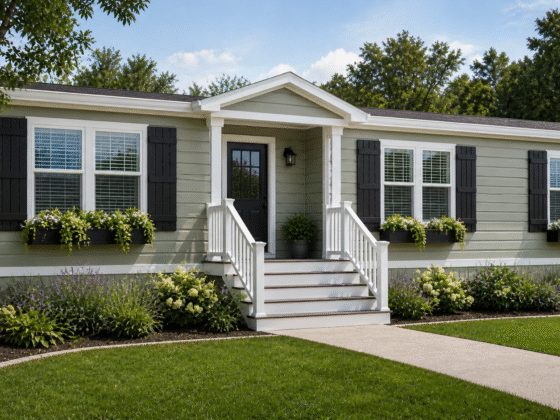
Paint the exterior vinyl siding
$300–$800 materials · IntermediateUse exterior acrylic paint formulated specifically for vinyl adhesion. Modern palettes — slate grey, navy, or crisp white — transform a faded double wide exterior. Never paint vinyl darker than the original shade: it absorbs more heat and can cause the panels to warp.
Manufactured stone veneer on foundation piers
$1,500–$4,500 · AdvancedCladding exposed foundation piers with manufactured stone veneer returns 153–208% at resale. Transforms the most obviously manufactured feature of any double wide into something indistinguishable from a site-built foundation.
General double wide upgrades (ideas 44–50)
High-SEER heat pump system
$3,000–$7,000 · Professional onlyReplace outdated electric furnaces with a high-efficiency heat pump. Given the historically limited insulation in older manufactured homes, a modern HVAC system is the single most impactful comfort and utility cost upgrade available.
Underbelly vapor barrier and insulation upgrade
$1,500–$4,000 · Professional onlyReplace torn polyethylene vapor barriers and upgrade underbelly and attic insulation. Can reduce utility bills by up to 30%. Critical for Florida and Gulf Coast double wides where ground moisture is a persistent structural threat. Related: best dehumidifier for Florida homes.
Recommended for double wide homes
A dehumidifier is the single most important appliance for protecting your double wide’s particleboard subfloor and underbelly from moisture damage. Here are the two we recommend:


Affiliate links — we may earn a small commission at no extra cost to you.
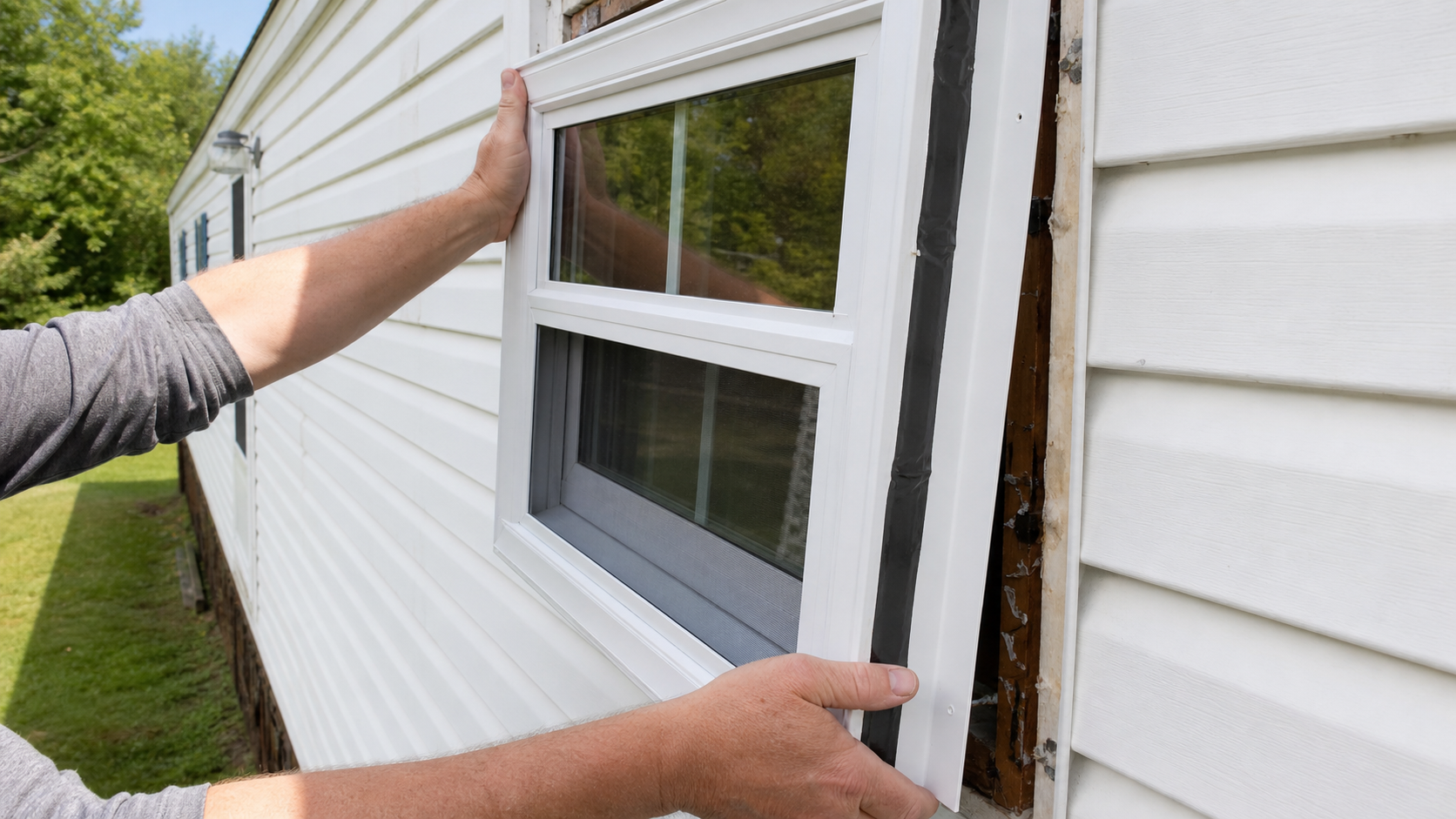
Low-E double-pane window replacement
$300–$600 per window · Professional onlyReplace single-pane factory aluminium windows with double-pane argon-filled vinyl windows with Low-E coatings. Drastically reduces solar heat gain in summer and eliminates perimeter drafts in winter.
Smart thermostat with room sensors
$150–$300 · BeginnerAn Ecobee or Nest with remote room sensors monitors temperature across the full length of a double wide — addressing the hot and cold spots that affect every long manufactured home. Installs in under an hour and starts reducing utility bills immediately.
Wireless smart lighting and smart plugs
$100–$400 · BeginnerBecause routing new electrical wire through shallow, insulated VOG wall cavities is extremely difficult, use plug-and-play smart plugs and wireless LED bulbs instead. Automates lighting scenes without any destructive wall work.
Centralised Wi-Fi mesh network
$200–$500 · BeginnerMetal siding and dense structural framing in manufactured homes disrupt wireless signals aggressively. A Wi-Fi 7 mesh network with hardwired backhaul routed through the underbelly crawlspace eliminates dead zones in a 2,500 sq ft double wide completely.
PoE hardwired exterior security cameras
$300–$800 · IntermediatePower over Ethernet cameras routed through the underbelly provide uninterrupted exterior surveillance without needing 120V outlets on the exterior siding. More reliable than wireless cameras and avoids battery replacement issues entirely.
Real 2026 cost breakdown
| Room | Budget ($0–$500) | Mid-range ($500–$2,000) | Full reno ($2,000+) |
|---|---|---|---|
| Living room | Paint, trim, outlet covers | LVP flooring, new lighting | Built-ins, drywall: $5K–$10K |
| Kitchen | Cabinet paint, backsplash | Appliances, counters | Custom cabinetry + island: $14K–$41K |
| Master bedroom | Wallpaper, curtains | Carpet, closet, smart lighting | Room expansion: $1.5K–$5.5K |
| Bathroom | Epoxy tub, painted vanity | Fiberglass surround, toilet, LVP | Walk-in shower, custom vanity: $6K–$17K |
Highest ROI upgrades for resale
Garage door
194–268%
ROI at resale
Steel entry door
188–216%
ROI at resale
Stone veneer
153–208%
ROI at resale
Minor kitchen refresh
96–113%
ROI at resale
Fibre cement siding
114%
ROI at resale
Frequently asked questions
What does the inside of a double wide mobile home look like?
A modern double wide interior closely resembles a traditional site-built house. The open-concept floor plan easily accommodates large families, ceilings run 8–9 feet high, and the two halves meet at a central load-bearing marriage wall. Most interiors feature VOG walls with visible batten strips, factory laminate flooring, and builder-grade fixtures — all of which are readily upgradeable with the techniques in this guide.
How do you modernise a double wide mobile home?
Start with the three changes that have the most visual impact per dollar: bond-prime and paint the VOG walls, replace the factory flush-mount lighting with statement fixtures, and upgrade the baseboard height from 2 inches to 5 inches. Then tackle flooring — continuous LVP with T-molding at the marriage line transforms the whole home in a weekend. Full guide: best flooring for mobile homes.
Can you open up a double wide floor plan?
Yes — but only by removing non-load-bearing partition walls. The central marriage wall is structural and supports the roof ridge beam. Removing it requires a structural engineer and a steel I-beam or LVL beam installation to carry the load. Non-structural partitions between living areas and hallways can be removed by a motivated DIYer in an afternoon.
How much does it cost to renovate a double wide?
A moderate renovation runs $11,000–$40,000. Cosmetic upgrades — paint, flooring, hardware, lighting — can be done for under $10,000. Full gut renovations including new roofing, HVAC, and complete kitchen and bathroom overhauls run $60,000–$80,000+. The sweet spot is the mid-range kitchen and bathroom refresh that returns 96–113% of its cost at resale.
What is the marriage wall in a double wide?
The marriage wall is the primary structural spine where the two factory-built halves of the home are bolted together on-site. It is load-bearing, supports the roof trusses, and cannot be removed without professional engineering. The most effective decorating approaches cover it — with board and batten, shiplap, built-in shelving, or gallery walls — rather than trying to finish it like standard drywall.
Are double wide mobile homes worth renovating?
Yes — particularly when permanently affixed to owned land. Well-executed renovations yield 96–268% ROI on the highest-return upgrades. Manufactured homes on owned land have appreciated 70.1% in recent years, making strategic renovations a sound financial investment. The key is prioritising exterior envelope and mechanical upgrades over luxury interior finishes.
Ready to start your double wide transformation?
Pick one room. Set a realistic budget. Start with the changes that have the highest ROI. The marriage wall isn’t a flaw — it’s a feature waiting to be transformed.



1 comment