DIY $ Sense
  • Home
  • About Us
  • Categories
    • Budget Renovations
    • DIY Home Repairs
    • Energy & Efficiency
    • Home Organization & Decor
    • Home Insurance Guide
    • Mobile & Modular Homes
    • Design Ideas
  • Privacy Policy
  • Terms and Conditions
  • Contact Us

Archives

  • April 2026
  • November 2025

Categories

  • Budget Renovations
  • Design Ideas
  • Energy & Efficiency
  • Home Insurance Guide
  • Home Organization & Decor
  • Mobile & Modular Homes
  • Home
  • About Us
  • Contact Us
  • Privacy Policy
  • Terms and Conditions
Subscribe
DIY $ Sense
DIY $ Sense
  • Home
  • About Us
  • Categories
    • Budget Renovations
    • DIY Home Repairs
    • Energy & Efficiency
    • Home Organization & Decor
    • Home Insurance Guide
    • Mobile & Modular Homes
    • Design Ideas
  • Privacy Policy
  • Terms and Conditions
  • Contact Us
  • Mobile & Modular Homes

Mobile Home Addition Ideas on a Budget (2026): 8 Best Options

  • April 27, 2026
  • James Carter
Mobile Home Addition Ideas on a Budget (2026): 8 Best Options
Total
0
Shares
0
0
0

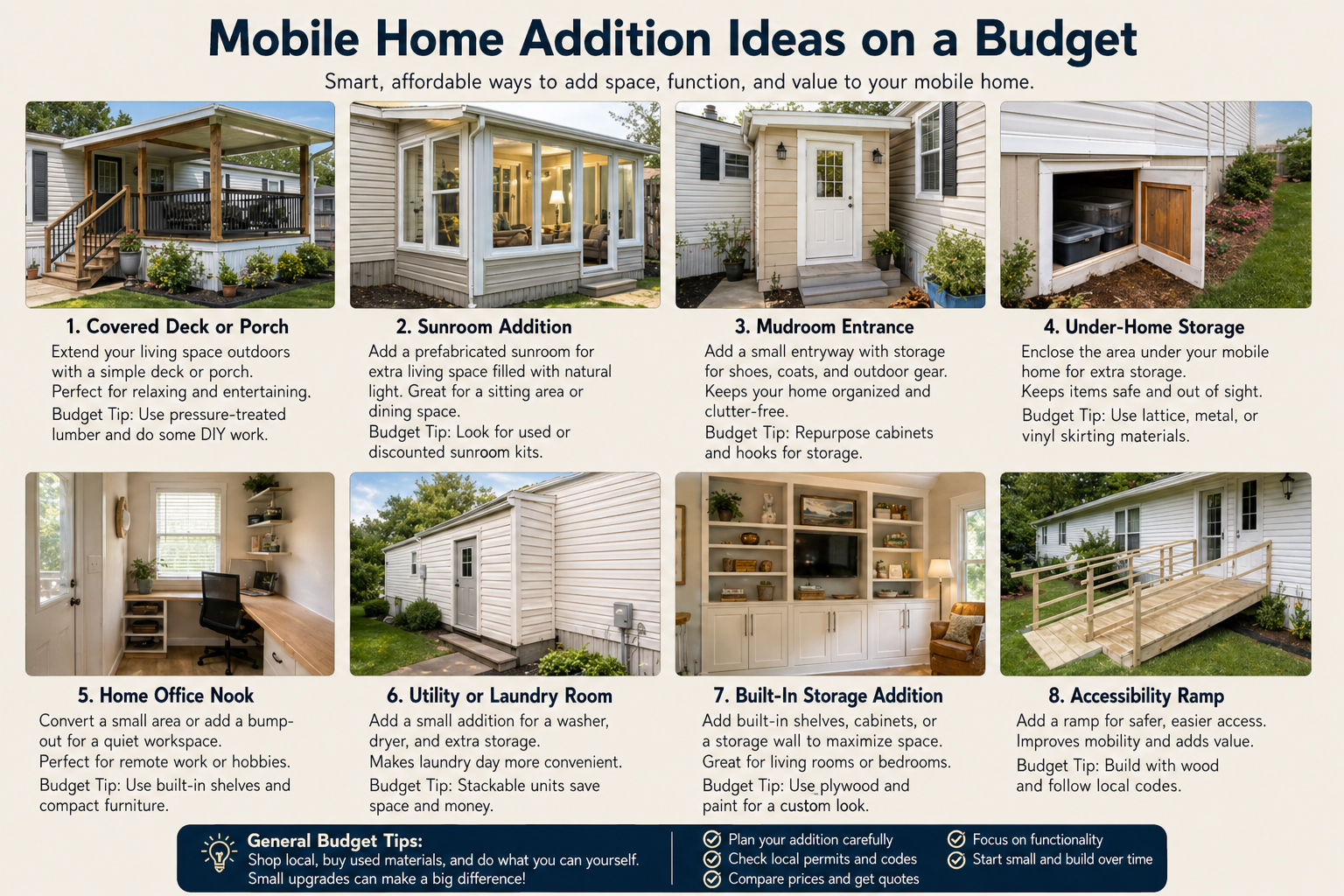
Yes — you can add an addition to a mobile home. But there’s one rule that changes everything: the addition must be structurally independent from the chassis. You cannot bolt a heavy porch, deck, or room directly to the steel I-beam frame without pulling the home out of level and voiding most manufacturer warranties. Every addition starts on its own foundation, stands on its own, and connects to the home with a flexible 1-inch gap that allows both structures to move independently.

This guide ranks the 8 best additions by cost and ROI, tells you what needs a permit and what doesn’t, and gives you the full step-by-step for the most popular project — the freestanding deck.

Budget adds
From $150
portable carport
Best ROI
95–100%
covered deck
Deck (12×16) DIY
~$5,200
materials only
Permit needed?
Usually
if over 30 inches
Critical rule
1″ gap
always freestanding

In this guide

→ Structural reality — what’s possible → The 8 best addition ideas ranked → How to build a freestanding deck → Budget ideas under $1,000 → ROI ranking and value guide → FAQ

Can you add an addition to a mobile home? The structural reality

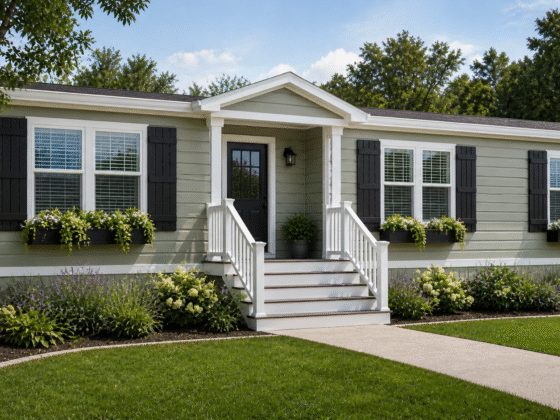
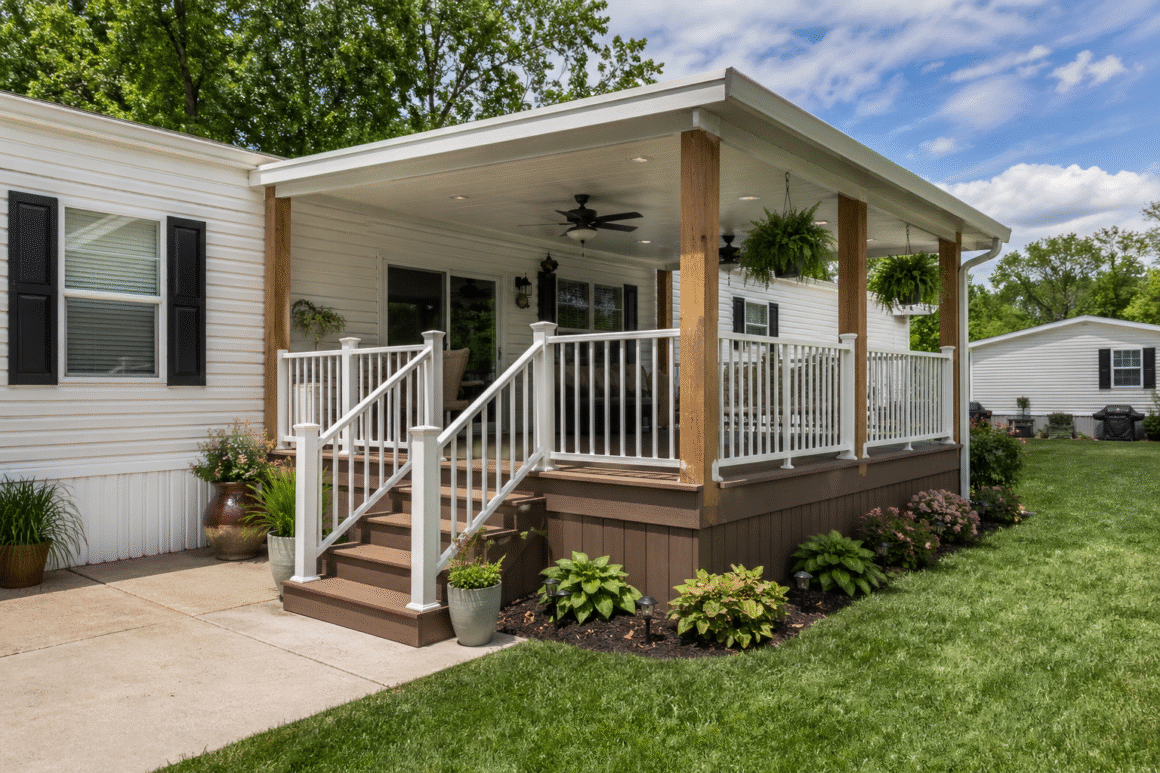
Well-maintained manufactured home exterior with a deck and landscaping
A freestanding deck is the most popular and highest-ROI addition for any manufactured home — but it must never be attached directly to the chassis

Manufactured homes are governed by the HUD Code — a federal standard that prioritizes transportability and load distribution across the steel chassis. Any site-built addition must comply with the local International Residential Code (IRC). These two systems operate independently, which means your addition must be treated as a separate building standing close to the first — not as an extension of it.

The chassis limitation. The steel I-beam frame is designed for specific point-load distributions. Attaching a heavy addition directly to it introduces off-center loads it was never designed to handle. The result: the home pulls out of level, doors bind, VOG walls crack at seams, and the original roof-to-wall seals fail. Full leveling context: how to level a mobile home.

The 1-inch gap rule. Every addition must maintain a 1-inch air gap between its frame and the mobile home’s siding. This gap allows both structures to move independently during temperature swings, wind, and soil settlement — without one pulling the other out of alignment. The gap is then sealed aesthetically with flexible flashing, not rigid caulk.

Permits: what requires one and what doesn’t. Any structure that adds habitable square footage, requires structural framing or roofing, or needs new electrical/plumbing/gas connections requires a local building permit. Gravel patios under 30 inches and detached sheds under 120 sq ft often don’t. Always confirm with your local building department before starting — park residents also need written HOA or management approval before breaking ground.

Foundation type 2026 cost Best for Key detail
Concrete pier-and-beam$1,000–$2,000Decks and porchesAllows re-leveling as soil settles
Slab-on-grade$4,000–$9,000Sunrooms and mudroomsMust include 6-mil vapor barrier
Helical piers$1,500–$3,500Soft soils, fast installNo excavation or concrete drying time
Deck blocks$50–$200Low decks in mild climatesNot suitable for Zone 3 frost heave areas

The 8 best mobile home addition ideas — ranked by ROI
1. Covered deck or porch — highest ROI
DIY: $3,500–$7,000 Hired: $8,000–$18,000 ROI: 95–100%
Freestanding deck construction diagram showing 1-inch gap between deck and mobile home

The covered deck is the single best addition for any manufactured home — it expands usable living space dramatically without the complexity of a conditioned thermal envelope, and it delivers near-full cost recovery at resale. The key rule: the deck must be entirely freestanding with a 1-inch gap maintained between the deck frame and the home’s siding.

Composite vs PT lumber

PT lumber: $3–$6/sq ft materials, needs biennial sealing. Composite (Trex): $8–$13/sq ft materials, 25–50 year lifespan, zero maintenance. Composite wins for long-term holds.

Permit required

Any platform over 30 inches or with a roof requires a local building permit. “Fourth wall construction” standard applies — the addition must be fully self-supporting.

2. Enclosed sunroom or three-season room
$15,000–$40,000 ROI: 45–70%

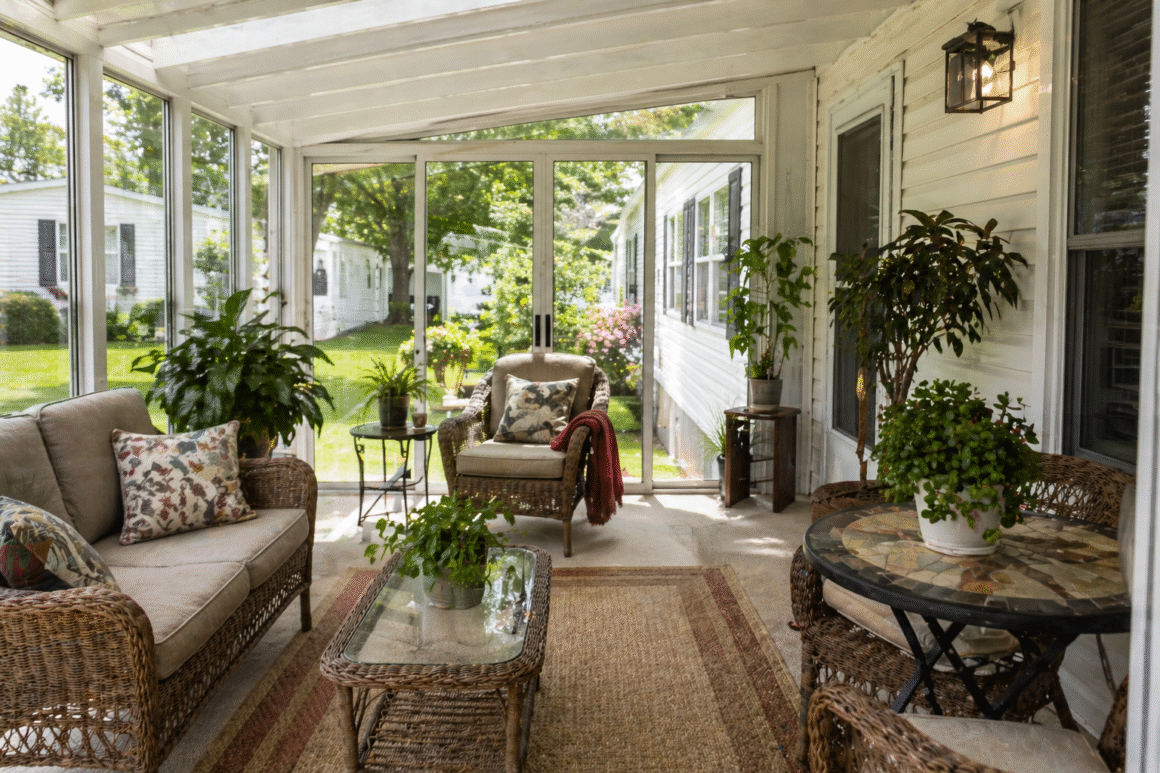
A prefab glass and aluminum sunroom addition attached to the side of a mobile home. Interior view showing wicker furniture, potted plants, bright natural light streaming through large windows. Warm and inviting. Photorealistic.

Sunrooms capitalize on lifestyle appeal — year-round outdoor connection and extra living space without full room addition costs. Prefab kits designed for manufactured homes (like Grand Vista) use aluminum headers that prevent moisture infiltration at the connection point.

Thermal envelope warning: If the sunroom is heated, it must be insulated to match your home’s HUD zone requirements (R-21 walls in Zone 3). In humid climates, the vapor barrier goes on the exterior side of insulation. A poorly connected sunroom creates a moisture trap that rots the adjacent wall cavity within 2–3 seasons. See: mobile home insulation guide.

3. Attached carport or garage
Carport: $1,500–$4,000 · Garage: $15,000–$30,000 ROI: ~100% garage door
Steel carport structure beside a residential building
Steel carport kits (Arrow, Canopia) are the most cost-effective vehicle protection option for manufactured homes

Steel carport kits are the fastest, cheapest vehicle protection upgrade available. The critical rule: never attach the carport roof to the mobile home’s existing fascia. The carport must have its own support posts adjacent to the home — any roof load transferred to the home’s fascia will crush the roof edge over time.

Carport kit ($1,500–$4,000)

Arrow or Canopia steel kit. DIY assembly. No permanent footing required for some models. Best for budget protection.

Full garage ($15,000–$30,000)

Requires permit, slab foundation, and licensed contractor. Highest long-term value but significant upfront cost.

4. Mudroom or entry vestibule
DIY: $3,000–$8,000 · Pro: $6,500–$18,000 High functional ROI

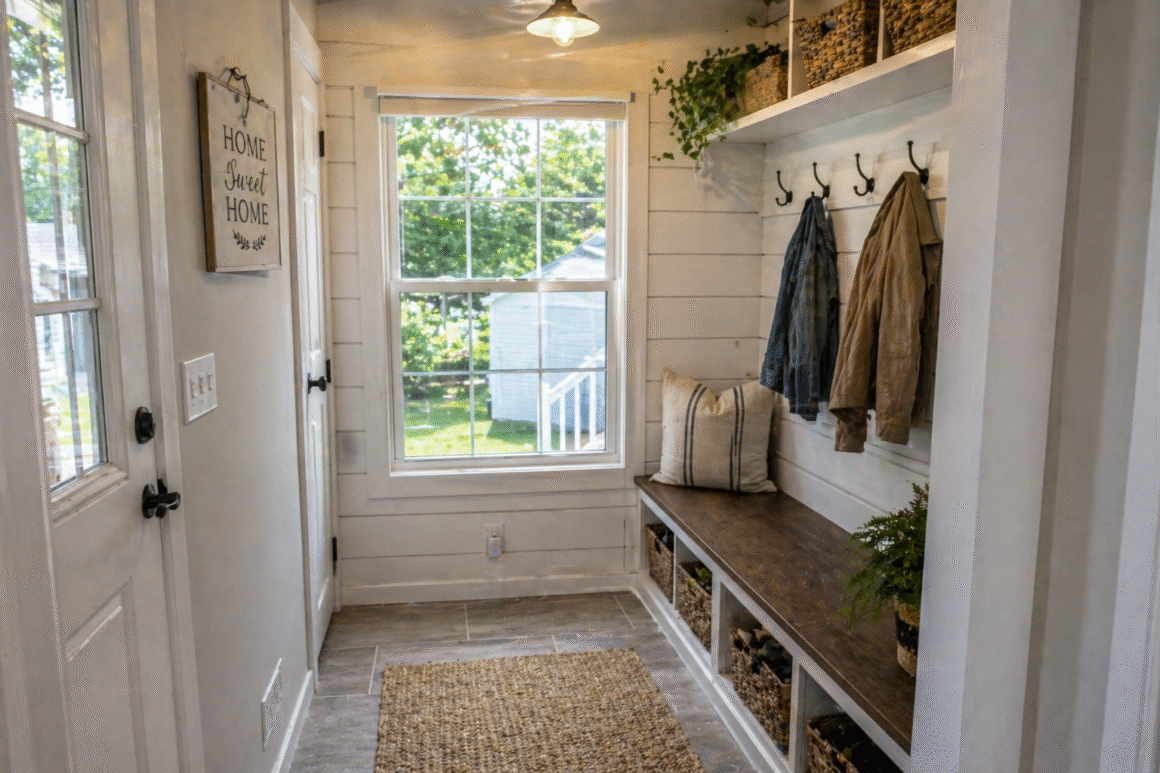
A small but well-organized mudroom addition attached to the entrance of a mobile home. Built-in bench with storage baskets, hooks for coats, tile floor, a window letting in natural light. Modern farmhouse style. Photorealistic interior.

The mudroom is the most budget-friendly permanent room addition — typically 36–100 sq ft built on its own concrete slab or pier system. It solves the mobile home’s biggest practical problem: no decompression zone between the outside world and the living space.

Connection detail: Use a beveled 1×4 board on the deck side with weatherstripping to create a compression seal between the mudroom and the mobile home siding. This allows micro-movement without air infiltration. Permit required in most jurisdictions.

5. Detached storage shed or workshop
$500–$5,000 ROI: 50–60% Often no permit

Freestanding sheds under 120 sq ft typically require no permit in most jurisdictions — confirm with your local building department. Metal sheds (Arrow brand) offer superior fire resistance. Resin sheds are low maintenance. If connecting electrical, 2026 NEC Section 230.70 requires an outdoor disconnect within sight of the building.

Metal

Fire resistant, durable in harsh climates

Resin

Zero maintenance, lightweight

Wood

Most customizable, needs sealing

6. Modular room addition — bedroom or living space
$15,000–$50,000 Professional only

A full room addition is the most complex and expensive project — but it’s the only addition that adds appraised square footage to the home. Factory-built modular room additions are delivered and craned into place on a slab foundation ($6,000–$12,000 additional). The foundation must be engineered to prevent the two structures settling at different rates.

Permit warning: Room additions almost always require intensive permitting — foundation certification, structural engineering, and multiple inspections. Budget $1,500–$3,000 in permit and engineering fees on top of construction costs. This addition should only be considered if you’re staying in the home 7+ years or targeting a high-end resale. See the broader remodel context: mobile home remodel ideas on a budget.

7. Screened porch or lanai
$2,000–$8,000 Highly marketable in Zone 1

In Florida and Gulf Coast climates, a screened porch is considered essential rather than optional. Aluminum framing is preferred over wood — it resists salt air and termites, which are significant concerns in Zone 1 coastal areas. Super Screen mesh (3× stronger than standard fiberglass, 20-year lifespan) is the 2026 standard for wind-prone areas. Screens must withstand 110 mph winds in coastal zones. Related to Florida-specific home upgrades: Florida home moisture management.

8. Outdoor kitchen or BBQ area
$1,500–$10,000 ROI: 60–80%

A freestanding outdoor kitchen requires no permit unless permanent gas or electrical lines are installed. Concrete block frames are the traditional DIY build. Prefab aluminum frames are lighter and easier to reposition on existing patios. If connecting gas or electrical, all outdoor outlets must meet 2026 NEC Article 210.8(F) GFCI protection standards.

Step-by-step: how to build a freestanding deck for a mobile home
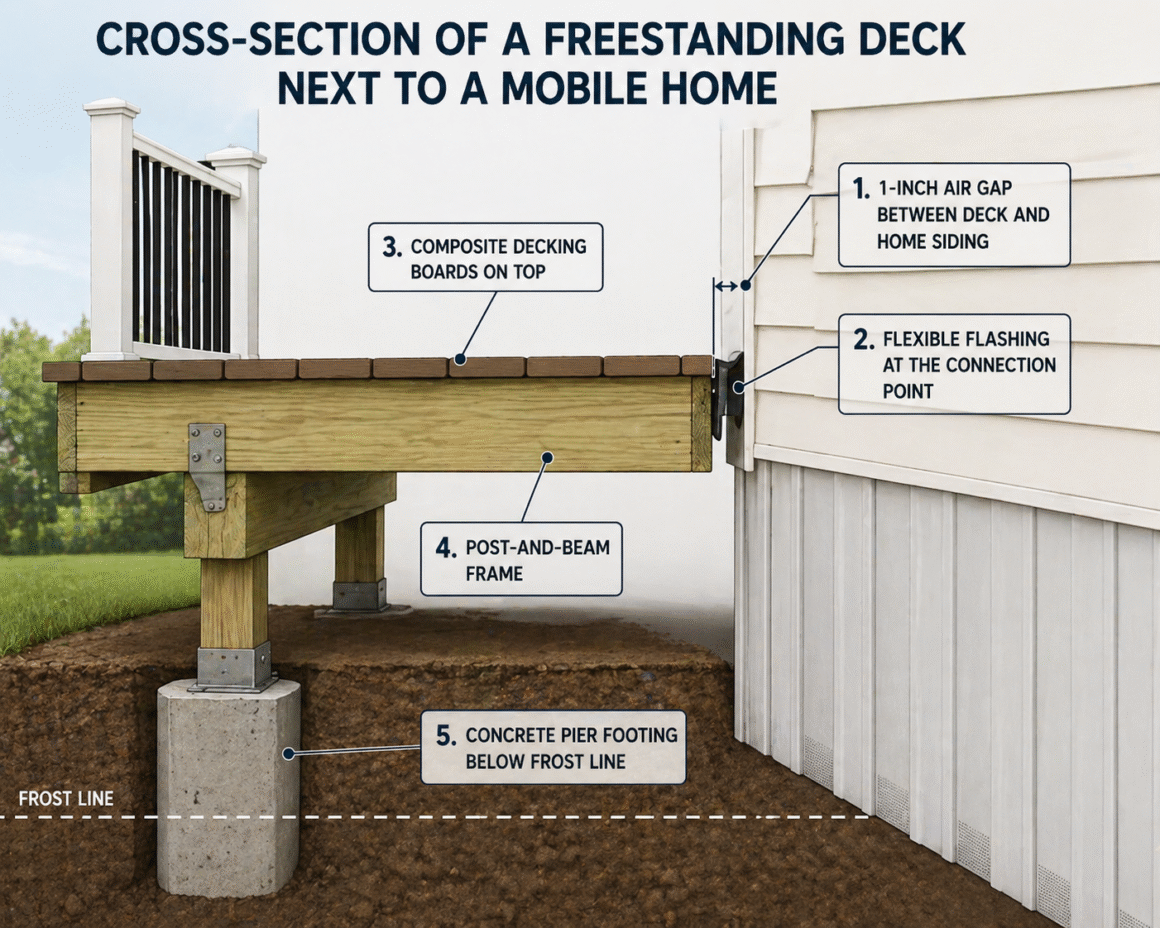
Diagram showing a cross-section of a freestanding deck next to a mobile home. Labels showing: 1-inch air gap between deck and home siding, concrete pier footing below frost line, post-and-beam frame, composite decking boards on top, flexible flashing at the connection point. Clean architectural illustration style with clear labels.

Building a deck for a manufactured home requires a different approach than site-built construction. The single most important difference: no ledger board attached to the home. The deck stands on its own. Here’s the complete process.

1

Planning and measuring

Measure the exterior door threshold height and the roof overhang. The deck surface should sit 1 to 1.5 inches below the door threshold to prevent rain from driving into the home. Mark the perimeter with batter boards and mason string. Verify square by measuring both diagonals — they must be equal.

2

Footing installation

Concrete piers: Dig 12-inch diameter holes to the local frost line (36–48 inches in Zone 3). Pour concrete into Sonotubes and insert adjustable post anchors before it sets. Helical piers: Mechanically driven screw-piles — no excavation, no concrete drying time. Best for DIYers and soft-soil sites. Deck blocks: Surface-set only — only appropriate in Zone 1 climates without frost heave risk.

3

Frame the deck — no ledger board

Erect 4×4 or 6×6 pressure-treated posts and attach double 2×10 beams using galvanized carriage bolts. Install 2×8 or 2×10 joists at 16 inches on-center. The inner rim joist runs parallel to the home but never touches it — this is the freestanding principle in practice.

!

The 1-inch connection gap — critical

Maintain a 1-inch air gap between the deck’s inner rim joist and the mobile home’s siding. This gap prevents the deck from rubbing against the home during wind or thermal movement, allows airflow that protects the wall from rot, and means the two structures can settle independently. Never bridge this gap with rigid framing.

4

Weatherproof the connection aesthetically

Screw a 1×6 trim board to the home. Install a beveled 1×4 board on the deck side, using weatherstripping to create a compression seal that allows micro-movement without letting in air or water. This is not structural — it’s a weather seal only.

5

Install decking and railings

Use hidden fasteners for composite decking — they eliminate surface screws that trap moisture and cause rot. Install railings if the deck is over 30 inches from grade — code requires it. Railing kits for a standard deck run $150–$200 per 6-foot section.

2026 material cost breakdown — 12×16 freestanding deck (DIY)

ItemUnit priceQtyTotal
Concrete and Sonotubes$456$270
Adjustable post anchors$186$108
6×6 PT posts (8 ft)$326$192
2×10 PT beams (12 ft)$284$112
2×8 PT joists (16 ft)$2414$336
Composite decking (sq ft)$12192$2,304
Hidden fastener box$1152$230
Railing kits (6 ft)$1508$1,200
Hardware, screws, trim——$450
Total DIY material cost (12×16 deck)~$5,202
Same deck, professional install$10,000–$18,000

Budget addition ideas under $1,000

Outdoor patio area with gravel, pavers and simple furniture beside a home
A gravel patio with pavers and simple furniture creates an outdoor living area for under $600 — no permits, no foundation, no contractor

Gravel patio with pavers

$200–$600

Clear grass, lay landscape fabric, fill with 2–3 inches of crushed limestone (packs better than pea gravel). Add stepping stones, a bistro set, and string lights. No permits. Zero foundation. One weekend.

Pre-built pergola or gazebo

$300–$800

Backyard Discovery kits ship flat-pack and assemble in a weekend. Some include PowerPort integrated charging and lighting. Anchors to ground with stakes — no concrete required.

Portable carport tent

$150–$400

King Bird heavy-duty shelters provide UV and rain protection. Assembly in a few hours with no permanent footings. Classified as personal property — no permit, no foundation, no problem.

Raised garden beds with seating

$100–$400

PT lumber frames with a built-in bench along one side. Creates a social outdoor centerpiece. No permits. Pairs well with the gravel patio as a combined weekend project.

What adds the most value to a mobile home?

Valuation follows the 30% rule — total renovation and addition costs should not exceed 30% of the home’s current market value. For a $120,000 manufactured home, that cap is $36,000. Exceeding it means you’re adding more than the market will return (overcapitalization). See the full remodel cost context: how much does it cost to remodel a mobile home.

Addition 2026 ROI Appraised value impact Permit
Steel entry door188–200%High — curb appealNo
Garage door upgrade100–190%High — asset protectionSometimes
Freestanding deck75–95%Medium — amenity valueUsually yes
4-season sunroom50–70%High — adds sq ftYes
Outdoor kitchen60–80%Medium — lifestyle appealOnly if gas/electric
Storage shed50–60%Low — personal propertyOften no
Modular room addition50–65%High — adds appraised sq ftYes (intensive)

Appraised value vs marketability: Additions with fixed foundations that are integrated into the home’s thermal envelope (4-season sunrooms, modular rooms) are more likely to be counted in square footage appraisals. Decks and carports are typically treated as amenities — they increase market value and sell the home faster, but aren’t added to appraised living space. Both matter at resale. Additions that include storm shutters or impact-resistant roofing can also reduce insurance premiums by up to 15% with some carriers.

Frequently asked questions

Can you add a room to a mobile home?

Yes, but it must be structurally independent of the home’s chassis. Modular room additions are factory-built, delivered on a truck, and craned into place on a freestanding slab foundation. They are the most efficient path to adding conditioned living space that is recognized by lenders and appraisers. Budget $15,000–$50,000 plus $6,000–$12,000 for the slab, and expect intensive permitting requirements.

Do you need a permit to build a deck on a mobile home?

Yes in most cases. Any deck that is elevated more than 30 inches above grade, has a roof, or connects to the home’s electrical system requires a local building permit. The permit process for manufactured homes often specifies “fourth wall construction” — meaning the deck must be fully self-supporting with no structural attachment to the home. Always confirm with your local building department before starting, and get written park or HOA approval if applicable.

What is the cheapest way to add space to a mobile home?

For non-conditioned space, a freestanding deck or gravel patio starts under $300 and can be done in a weekend. For covered storage, a portable carport tent runs $150–$400 with no permits or foundation. For permanent conditioned space at the lowest cost, a mudroom addition (36–60 sq ft) built on its own concrete slab runs $3,000–$8,000 DIY — the lowest cost-per-square-foot for a permanent room addition.

Can you attach a porch to a manufactured home?

Not structurally — the porch must be freestanding. Attaching the weight of a porch to the home’s fascia or wall studs will pull the home out of level over time and void most manufacturer warranties. The porch stands on its own foundation with a 1-inch air gap maintained between the porch frame and the home’s siding. A flexible flashing system seals the gap aesthetically without creating a rigid structural connection. For the leveling implications of attached structures: how to level a mobile home.

Does adding a deck increase mobile home value?

Yes — typically recovering 75–95% of its cost at resale. Decks are high-visibility upgrades that significantly improve first impression and dramatically reduce days on market. A $5,200 DIY composite deck typically adds $4,000–$5,000 in market value. Covered decks with a roof perform better than open decks in most markets. The full ROI picture for manufactured home upgrades: mobile home remodel cost guide.

How do you connect an addition to a mobile home?

The addition is built with its own foundation, 1 inch away from the home’s siding. The gap is then sealed with a flexible flashing system — typically a beveled 1×4 on the deck side pressed against a 1×6 trim board on the home, with weatherstripping creating a compression seal between them. This allows both structures to move independently with temperature and soil changes while keeping weather out. Never use rigid caulk or rigid framing to bridge this gap.

Ready to start your mobile home addition?

Start with the leveling check — an unlevel home makes every addition harder and every connection joint more likely to fail. Then pick your addition, pull the permit, and build freestanding.

Leveling guide → Remodel ideas → Full cost guide → Kitchen remodel → Insulation guide →

Total
0
Shares
Share 0
Tweet 0
Pin it 0
James Carter

Previous Article
How Much Does It Cost to Level a Mobile Home? (2026 Breakdown)
  • Mobile & Modular Homes

How Much Does It Cost to Level a Mobile Home? (2026 Breakdown)

  • April 25, 2026
  • James Carter
View Post
You May Also Like
How Much Does It Cost to Level a Mobile Home? (2026 Breakdown)
View Post
  • Mobile & Modular Homes

How Much Does It Cost to Level a Mobile Home? (2026 Breakdown)

  • James Carter
  • April 25, 2026
How Much Does It Cost to Insulate a Mobile Home? (2026 Breakdown)
View Post
  • Mobile & Modular Homes

How Much Does It Cost to Insulate a Mobile Home? (2026 Breakdown)

  • James Carter
  • April 25, 2026
How Much Does It Cost to Remodel a Mobile Home? (2026 Complete Breakdown)
View Post
  • Mobile & Modular Homes

How Much Does It Cost to Remodel a Mobile Home? (2026 Complete Breakdown)

  • James Carter
  • April 25, 2026
How to Fix Mobile Home Walls: Complete Repair Guide (2026)
View Post
  • Mobile & Modular Homes

How to Fix Mobile Home Walls: Complete Repair Guide (2026)

  • James Carter
  • April 25, 2026
How to Winterize a Mobile Home: Complete Checklist (2026)
View Post
  • Mobile & Modular Homes

How to Winterize a Mobile Home: Complete Checklist (2026)

  • James Carter
  • April 25, 2026
How to insulate a mobile home walls one complete guide.
View Post
  • Mobile & Modular Homes

How to insulate a mobile home walls one complete guide.

  • James Carter
  • April 20, 2026
How to Level a Mobile Home: Step-by-Step Guide (2026)
View Post
  • Mobile & Modular Homes

How to Level a Mobile Home: Step-by-Step Guide (2026)

  • James Carter
  • April 16, 2026
Double Wide Mobile Home Interior Ideas: 50 Real Transformations (2026)
View Post
  • Mobile & Modular Homes

Double Wide Mobile Home Interior Ideas: 50 Real Transformations (2026)

  • James Carter
  • April 10, 2026

Leave a Reply Cancel reply

Your email address will not be published. Required fields are marked *

Recent Posts

  • Mobile Home Addition Ideas on a Budget (2026): 8 Best Options
  • How Much Does It Cost to Level a Mobile Home? (2026 Breakdown)
  • How Much Does It Cost to Insulate a Mobile Home? (2026 Breakdown)
  • How Much Does It Cost to Remodel a Mobile Home? (2026 Complete Breakdown)
  • How to Fix Mobile Home Walls: Complete Repair Guide (2026)

Recent Comments

  1. Mobile Home Addition Ideas on a Budget (2026): 8 Best Options - DIY $ Sense on Best Dehumidifiers for Florida Homes (2026): What Actually Works in High Heat and Humidity
  2. Mobile Home Addition Ideas on a Budget (2026): 8 Best Options - DIY $ Sense on Mobile Home Remodel Ideas on a Budget: Room-by-Room Guide
  3. Mobile Home Addition Ideas on a Budget (2026): 8 Best Options - DIY $ Sense on How to insulate a mobile home walls one complete guide.
  4. Mobile Home Addition Ideas on a Budget (2026): 8 Best Options - DIY $ Sense on How to Level a Mobile Home: Step-by-Step Guide (2026)
  5. How Much Does It Cost to Insulate a Mobile Home? (2026 Breakdown) - DIY $ Sense on How Much Does It Cost to Remodel a Mobile Home? (2026 Complete Breakdown)
Featured Posts
  • Mobile Home Addition Ideas on a Budget (2026): 8 Best Options 1
    Mobile Home Addition Ideas on a Budget (2026): 8 Best Options
    • April 27, 2026
  • How Much Does It Cost to Level a Mobile Home? (2026 Breakdown) 2
    How Much Does It Cost to Level a Mobile Home? (2026 Breakdown)
    • April 25, 2026
  • How Much Does It Cost to Insulate a Mobile Home? (2026 Breakdown) 3
    How Much Does It Cost to Insulate a Mobile Home? (2026 Breakdown)
    • April 25, 2026
  • How Much Does It Cost to Remodel a Mobile Home? (2026 Complete Breakdown) 4
    How Much Does It Cost to Remodel a Mobile Home? (2026 Complete Breakdown)
    • April 25, 2026
  • How to Fix Mobile Home Walls: Complete Repair Guide (2026) 5
    How to Fix Mobile Home Walls: Complete Repair Guide (2026)
    • April 25, 2026
Recent Posts
  • How to Winterize a Mobile Home: Complete Checklist (2026)
    How to Winterize a Mobile Home: Complete Checklist (2026)
    • April 25, 2026
  • How to insulate a mobile home walls one complete guide.
    How to insulate a mobile home walls one complete guide.
    • April 20, 2026
  • How to Level a Mobile Home: Step-by-Step Guide (2026)
    How to Level a Mobile Home: Step-by-Step Guide (2026)
    • April 16, 2026
Follow Us On Pinterest
DIY $ Sense
  • Home
  • About Us
  • Contact Us
  • Privacy Policy
  • Terms and Conditions
Home Improvement on a Budget, DIY Made Simple

Input your search keywords and press Enter.