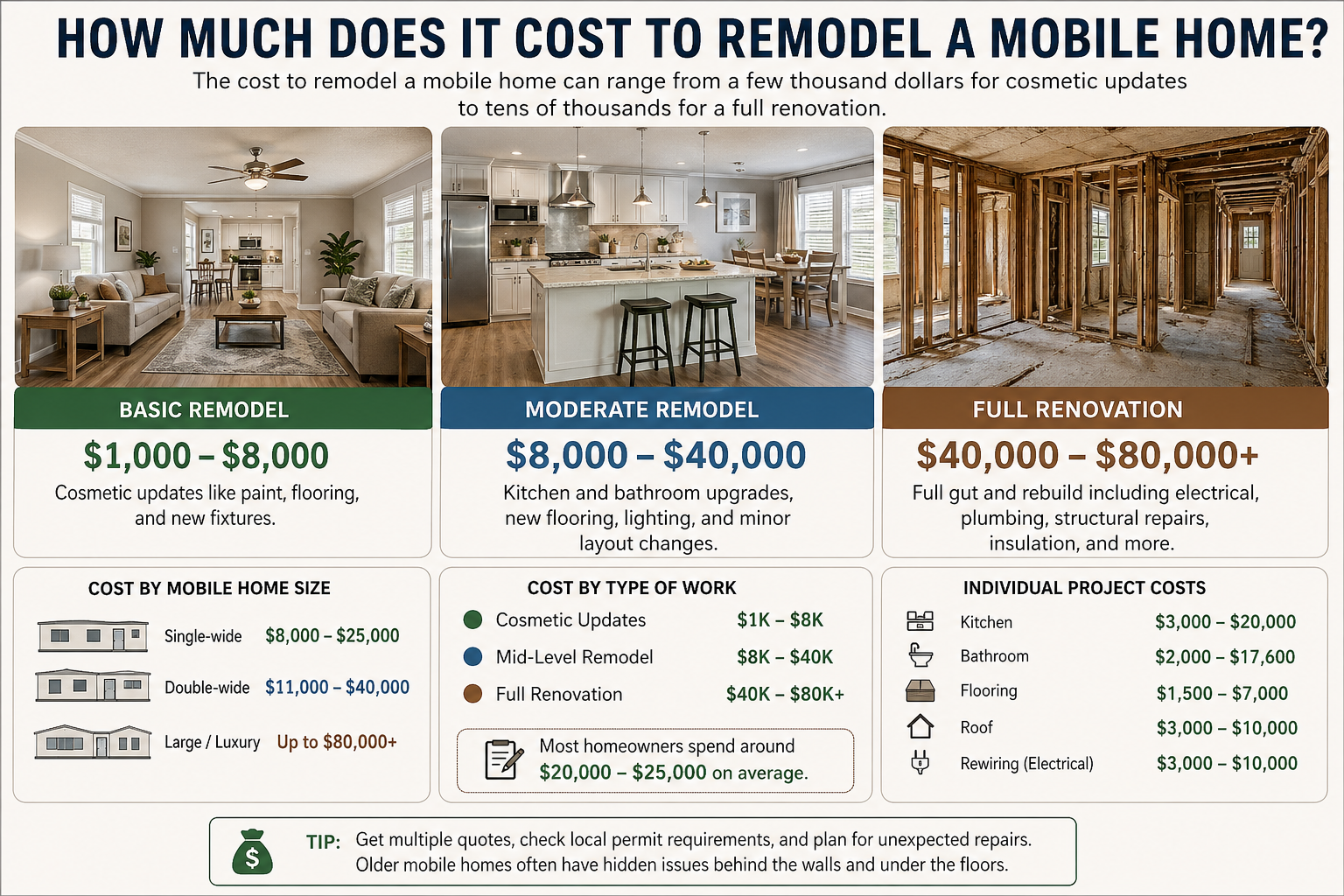
The honest answer is: anywhere from $500 to $80,000 — and that range is useless without context. A cosmetic refresh costs under $1,000 DIY. A full gut renovation with new cabinets, quartz countertops, LVP flooring, and insulation upgrades runs $40,000+. Everything else falls between those two points.
This guide breaks down real 2026 costs by room, by project type, and by whether you’re doing it yourself or hiring a contractor — using actual material and labor costs from mobile home projects, not site-built estimates applied to manufactured homes.
In this guide
Cost overview: the three project tiers
Every mobile home remodel falls into one of three tiers. Knowing which tier you’re targeting before you start prevents the most common budgeting mistake — starting a Tier 1 project and accidentally spending Tier 2 money without a Tier 2 result.
Room-by-room cost breakdown (2026)
Kitchen — $455 to $41,000+
The kitchen is the highest-cost and highest-return room in any mobile home. The most important decision is which tier you’re targeting — a Tier 1 cabinet repaint and hardware swap costs under $500 and returns 100%+ at resale. A Tier 3 full cabinet replacement runs $12,000–$41,000 and returns 60–80%. Full cost breakdown: mobile home kitchen remodel cost guide.
| Project | DIY cost | Hired cost | Tier |
|---|---|---|---|
| Cabinet repaint (TSP + Stix + enamel) | $130–$200 | $800–$2,000 | 1 |
| Hardware swap (30-piece pack) | $75–$125 | $200–$400 | 1 |
| Peel-and-stick backsplash | $100–$150 | $300–$600 | 1 |
| Freestanding island on casters | $200–$600 | N/A (DIY only) | 1–2 |
| Countertop replacement (laminate/butcher block) | $450–$850 | $1,200–$2,500 | 2 |
| Cabinet door refacing (MDF fronts) | $400–$700 | $1,500–$4,000 | 2 |
| Full cabinet replacement | $3,500–$5,500 | $8,000–$15,000 | 3 |
| Quartz countertops (2cm slab) | $1,800–$3,000 | $3,500–$6,000 | 3 |
Bathroom — $200 to $17,000
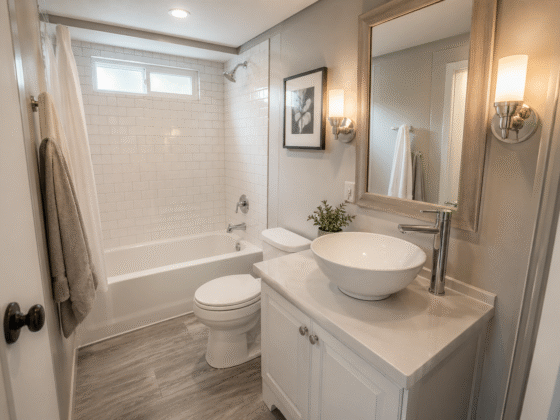
Mobile home bathrooms have non-standard dimensions — the 54×27-inch tub is the most important example. Always confirm measurements before ordering any replacement fixture. Plumbing runs through the floor, not the wall, which makes vanity replacement more complex than in site-built homes.
| Project | DIY cost | Hired cost | Tier |
|---|---|---|---|
| Epoxy tub restoration | $60–$100 | $300–$600 | 1 |
| Mirror + wall sconces | $100–$300 | $300–$700 | 1 |
| Vanity repaint + new basin | $100–$300 | $400–$900 | 1 |
| 54×27 tub surround (mobile home spec) | $200–$600 | $800–$2,000 | 2 |
| Floating vanity installation | $400–$1,200 | $1,500–$3,500 | 2–3 |
| Walk-in shower conversion | $1,500–$4,000 | $4,000–$9,000 | 3 |
Flooring — $650 to $4,000 for a single wide
LVP (Luxury Vinyl Plank) is the correct choice for mobile homes — it floats over the particleboard subfloor, handles chassis flex without cracking, and is 100% waterproof. Never glue it down and always install T-molding at the marriage line on double wides. Full guide: best flooring for mobile homes.
| Flooring type | DIY cost (1,000 sq ft) | Notes |
|---|---|---|
| Waterproof LVP (recommended) | $650–$1,100 | Best choice — floating install, chassis flex compatible |
| Laminate | $500–$900 | Moisture sensitive — avoid in kitchens and bathrooms |
| Carpet | $400–$800 | Bedrooms only — traps moisture on particleboard subfloor |
| Subfloor repair (soft spots) | $400–$800 per room | Replace with 3/4-inch marine-grade plywood |
| Ceramic tile | $800–$1,500 | Not recommended — cracks at grout lines as chassis flexes |
Interior walls and painting — $200 to $5,000
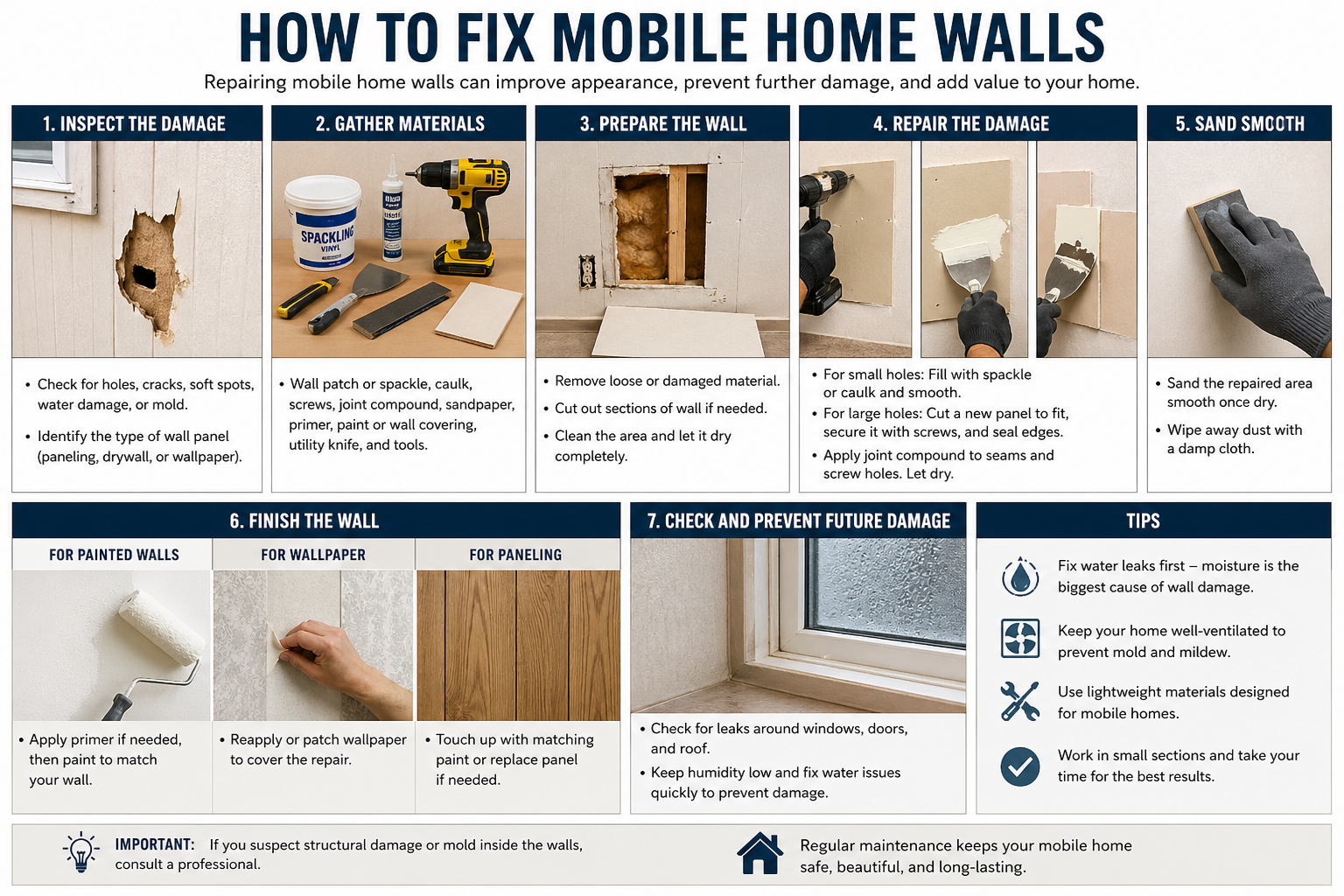
VOG wall repairs and repainting are the most cost-effective upgrades in any mobile home. The key cost is in the primer — INSL-X Stix bonding primer is non-negotiable on vinyl surfaces. Skipping it means the paint peels within months. Full repair guide: how to fix mobile home walls.
| Project | DIY cost | Hired cost |
|---|---|---|
| Hairline crack repair (flexible caulk) | $15–$30 | $150–$300 |
| Full wall repaint (bonding primer + 2 coats) | $200–$500 | $1,500–$3,500 |
| Board and batten accent wall | $150–$400 | $800–$2,000 |
| VOG panel replacement (per panel) | $50–$150 | $300–$600 |
Systems and structural costs
Systems work — insulation, leveling, HVAC, roofing — costs more upfront than cosmetic upgrades but protects everything else you spend money on. A beautiful kitchen remodel degrades in 3 years if the subfloor beneath it is wet and uninsulated.
| System upgrade | DIY cost | Professional cost | Annual savings |
|---|---|---|---|
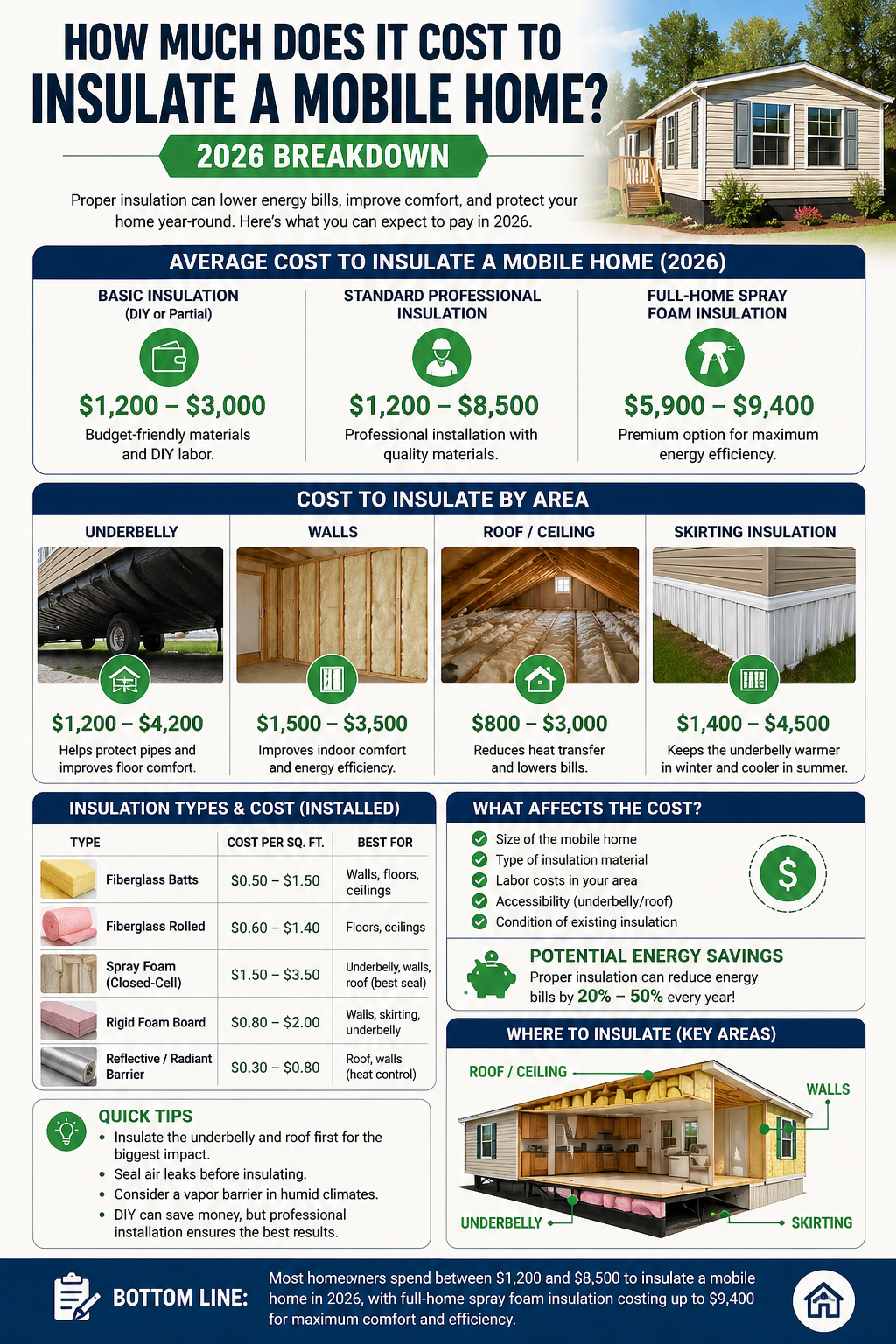
| Underbelly re-insulation (1,000 sq ft) | ~$1,500 | $2,500–$4,000 | 10–20% energy |
| Full envelope insulation (belly + ceiling) | $2,500–$4,500 | $5,000–$9,000 | 10–40% energy |
| Releveling — single wide (pro) | $200–$350 (tools) | $450–$700 | Prevents structural damage |
| Releveling — double wide (pro) | $350–$500 (tools) | $750–$1,200 | Prevents structural damage |
| High-SEER heat pump replacement | Professional only | $3,000–$7,000 | 15–30% HVAC cost |
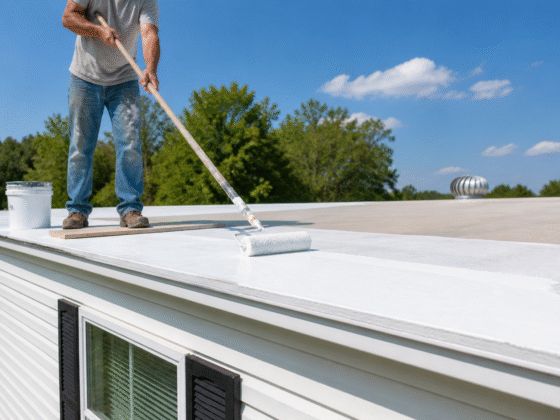
| Roof-over installation | Professional only | $8,000–$20,000 | 25–35% energy |
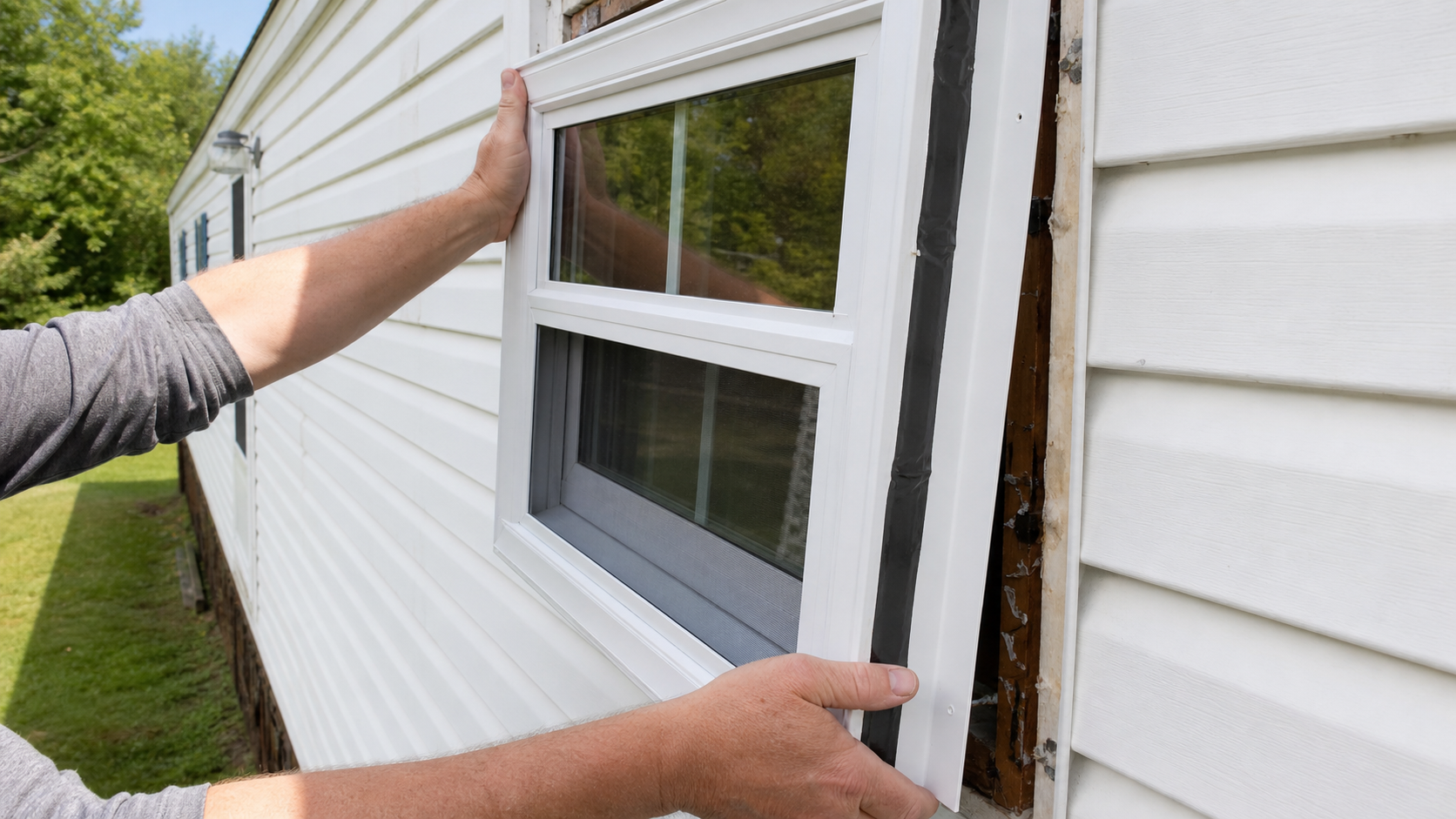
| Low-E window replacement (10 windows) | Professional only | $3,000–$6,000 | ~$350/year |
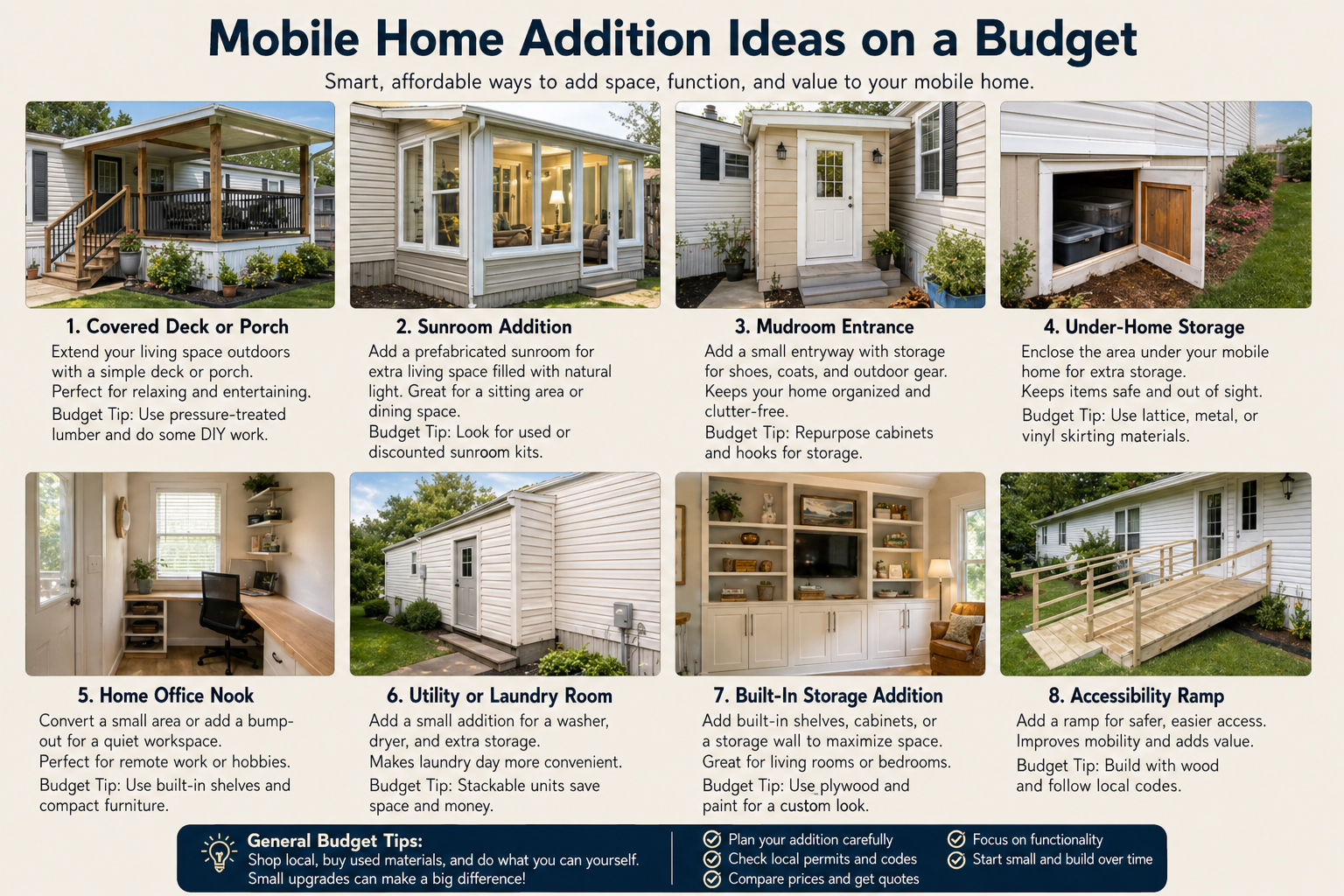
| Deck or porch addition | $3,000–$8,000 | $8,000–$20,000 | ~95% ROI at resale |
DIY vs professional: what’s worth hiring out
The average DIY saving on a mobile home remodel is 40–60% compared to hiring contractors. But not every task belongs in the DIY column — some require licensed trades, specialist equipment, or carry risks that outweigh the savings.
✓ Strong DIY candidates
Cabinet painting and hardware
LVP flooring installation
Wall repair and repainting
Backsplash and countertop epoxy
Underbelly insulation (batt method)
Lighting fixture replacement
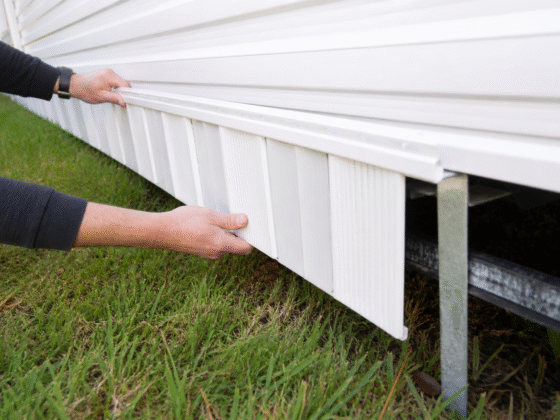
Skirting repair and replacement
Board and batten installation
Basic releveling (minor corrections)
⚠️ Hire a professional for these
HVAC replacement or major repairs
Electrical panel upgrades or rewiring
Roof-over installation
Gas line work of any kind
Chassis-level releveling (over 1 inch)
Window replacement
Major plumbing rerouting
Marriage wall structural modification
Mold remediation over 10 sq ft
Highest ROI upgrades for mobile homes (2026)
Return on investment in manufactured housing follows a different pattern than site-built homes. Exterior upgrades and mechanical systems consistently outperform interior luxury upgrades at resale. The data below reflects 2026 Cost vs. Value analysis applied to manufactured housing specifically.
Steel entry door
188–216%
Cost: $400–$1,200
Stone veneer piers
153–208%
Cost: $1,500–$4,500
Deck / porch
~95%
Cost: $3,000–$12,000
Minor kitchen refresh
96–113%
Cost: $455–$3,000
Landscaping
100%+
Cost: $200–$800
Full kitchen reno
60–80%
Cost: $12,000–$41,000
The pattern: Exterior upgrades (door, landscaping, piers, porch) consistently return over 100% in manufactured housing. Interior luxury upgrades (quartz countertops, full kitchen cabinets, bathroom gut) return 60–80% — still meaningful, but only worth doing if you’re staying long-term or targeting a premium resale. Minor cosmetic refreshes in the kitchen and bath return over 100% because the cost is so low relative to the visual impact.
What affects your remodel cost most
1. Single wide vs double wide
A double wide (24–32 ft wide, 1,000–2,560 sq ft) costs roughly 1.8× more to remodel than a single wide at the same tier. More square footage means more flooring, more wall surface, more fixtures. Double wide specific considerations: double wide mobile home interior ideas.
2. Age of the home
Homes built before 1990 often have subfloor damage, outdated electrical (60-amp panels, aluminum wiring), and insulation that’s settled or missing entirely. Budget an additional 20–30% for a pre-1990 home to address hidden issues discovered during demo. The insulation upgrade alone can run $2,500–$4,500: how to insulate a mobile home.
3. Whether the home is level
An unlevel home damages every upgrade you install. New LVP flooring buckles at the marriage line. Fresh wall paint cracks at seams. New cabinets go out of square. Leveling before any interior work is not optional — it costs $450–$1,200 professionally and protects everything else you spend. Full guide: how to level a mobile home.
4. Moisture and subfloor condition
Particleboard subfloor damage is the most common hidden cost in mobile home remodels. A soft spot under the kitchen sink can mean $400–$800 of subfloor repair before you can install new flooring. Check every room with the thumb-press soft test before budgeting.
5. Location and labor market
Contractor labor rates for manufactured home specialists vary significantly by region. Rural areas often have lower rates but fewer specialists, meaning general contractors who charge site-built rates. Florida and the Gulf Coast have the most competitive manufactured home contractor market due to demand.
The 30% rule — and when to ignore it
The 30% rule states that you should not invest more than 30% of a home’s current market value into renovations if you intend to sell. For a manufactured home valued at $80,000, that cap is $24,000.
When the 30% rule applies
You’re planning to sell within 3–5 years. The home is on rented land (park lot) where land appreciation doesn’t compound your renovation investment. The local market has a ceiling price for manufactured homes regardless of condition.
When to ignore the 30% rule
You own the land and it’s appreciating. You’re staying 10+ years (quality of life ROI matters more than resale ROI). You’re in a strong manufactured housing market where well-renovated homes sell significantly above the local average.
The practical rule: Always prioritize structural and systems work (leveling, insulation, subfloor) over cosmetic upgrades — these protect the home’s value regardless of resale timing. Then apply the 30% rule to cosmetic and luxury upgrades only. A home with good bones and modest finishes is always worth more than a beautifully decorated home sitting on failing piers with a torn belly wrap.
Frequently asked questions
How much does it cost to completely remodel a mobile home?
A complete gut renovation — new cabinets, quartz countertops, LVP flooring throughout, bathroom overhaul, new roofing, and HVAC — runs $40,000–$80,000 for a single wide and $60,000–$120,000 for a double wide when hiring contractors. DIY brings those numbers down by 40–60% for the work you can self-perform. Most homeowners target the middle — a Tier 2 renovation of $10,000–$25,000 that replaces failing surfaces and addresses the most visible rooms.
Is it worth renovating a mobile home?
Yes — particularly when the home sits on owned land. Manufactured homes on owned land have appreciated significantly in recent years, and well-executed renovations yield 96–216% ROI on the highest-return upgrades. The key is prioritising correctly: structural and systems work first (leveling, insulation, subfloor), then high-ROI cosmetic upgrades (entry door, kitchen refresh, exterior), then luxury interior work if the budget allows. A poorly prioritized renovation — expensive kitchen in a home that’s out of level with a torn belly wrap — destroys value instead of creating it.
What is the cheapest way to remodel a mobile home?
The highest impact per dollar is the Tier 1 cosmetic refresh: TSP clean and repaint cabinets with INSL-X Stix bonding primer and cabinet enamel ($130–$200), swap hardware to matte black pulls ($75–$125), add a peel-and-stick backsplash ($100–$150), and replace the lighting fixture ($60–$100). Total under $600, and the visual transformation is dramatic. This sequence produces results that look like a $3,000–$5,000 professional refresh at a fraction of the cost.
How much does it cost to gut a mobile home and start over?
A full gut renovation — stripping everything to the studs and starting over — typically runs $60,000–$120,000 for a professionally executed single wide project when you include new cabinets, all new surfaces, updated electrical, new plumbing fixtures, HVAC, and roofing. At that price point you need to carefully evaluate whether buying a newer manufactured home makes more financial sense than gut renovating an older one. The gut renovation math often works when the home is on owned, appreciated land where the land value alone justifies the investment.
What is the most expensive part of a mobile home remodel?
Full kitchen cabinet replacement ($8,000–$15,000 hired) and roof-over installation ($8,000–$20,000) are typically the two highest single-project costs. HVAC replacement ($3,000–$7,000) and window replacement ($3,000–$6,000) follow. The kitchen consistently represents the largest spend in any major remodel — which is also why a minor kitchen refresh (paint + hardware + backsplash) at under $600 delivers some of the best ROI available.
Can I remodel a mobile home myself?
Most Tier 1 and significant portions of Tier 2 work are well within DIY capability — cabinet painting, LVP flooring, wall repair, lighting replacement, insulation, skirting, and basic leveling. The tasks that require licensed trades are electrical panel work, gas line modifications, HVAC installation, and structural leveling when the home is more than 1 inch out of level. DIY saves 40–60% on labor, but only when the technique is correct — using the wrong products (standard joint compound on VOG walls, or ceramic tile on particleboard) creates expensive rework.
Does renovating a mobile home increase its value?
Yes — strategically executed renovations do increase appraised and market value. Entry door replacement returns 188–216%, stone veneer foundation work returns 153–208%, and minor kitchen refreshes return 96–113%. Full luxury renovations like quartz countertops recoup 60–70% in manufactured home appraisals. The home’s location (owned vs rented land) and local market conditions determine the ceiling. A well-renovated home in a desirable park or on owned land can sell for 30–50% more than an unrenovated comparable unit.
Home type
Square footage: 900 sq ft
Home age
Complete room-by-room remodel guides
Start with the right tier for your budget
Pick your budget, pick your tier, and prioritise structural work before cosmetic upgrades. The $600 Tier 1 kitchen refresh returns more per dollar than a $15,000 cabinet replacement in almost every mobile home scenario.


1 comment